Skip to content

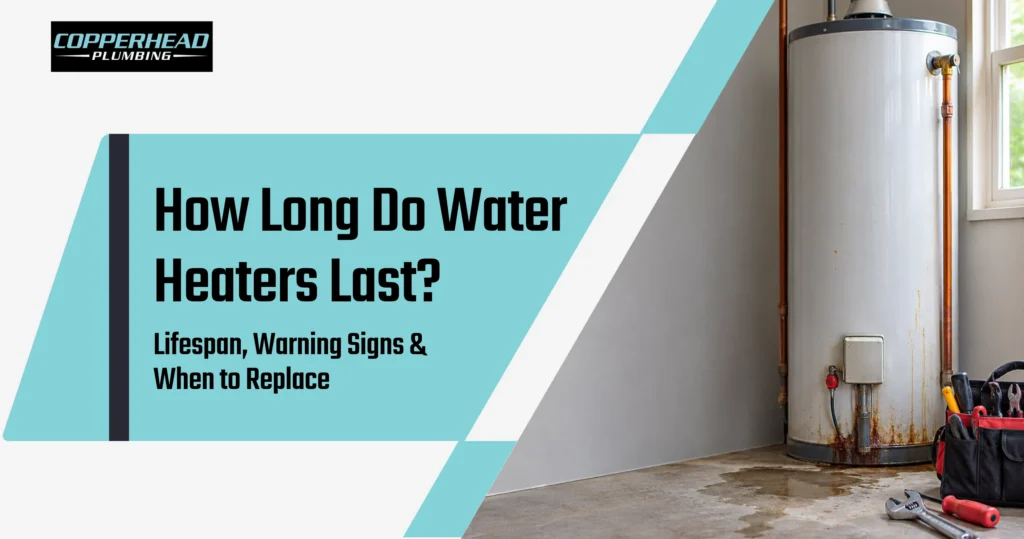
Water heaters last 8 to 12 years for conventional storage-tank models, while properly maintained tankless water heaters can last 20+ years. Water heater lifespan varies according to equipment type, tank condition, water quality, household usage, installation, and maintenance. Gas and electric storage water heaters have shorter service lives than tankless systems because their steel tanks remain exposed to stored water and potential internal corrosion. Heat-pump, propane, and manufactured-home water heaters have different operating components and installation requirements that also influence their life expectancy.
The average life of a water heater depends on how effectively its components resist sediment buildup, mineral scaling, corrosion, and repeated heating cycles. As a water heater approaches the end of its expected service life, reduced hot-water output, unusual tank noises, rusty water, leakage, and repeated repairs may indicate declining performance. Determining the heater’s age, inspecting its condition, and comparing repair costs with replacement expenses helps homeowners decide whether continued operation is practical or a new water heater is necessary.
Average Water Heater Lifespan by Type
Water heaters last 8 to 20 years or longer, depending on the type, with gas storage-tank models lasting 8 to 12 years, electric storage-tank models 10 to 15 years, and tankless models 20+ years. Water quality, household usage, installation, and maintenance influence these lifespans. Sediment buildup, corrosion, and component wear shorten service life, while regular maintenance helps extend it.
Average water heater lifespan by type:
| Water Heater Type | Average Lifespan |
| Gas storage-tank water heater | 8–12 years |
| Electric storage-tank water heater | 10–15 years |
| Tankless water heater | 20+ years |
| Heat-pump (hybrid) water heater | 10–15 years |
| Propane storage-tank water heater | 8–12 years |
| Mobile-home water heater | 8–15 years |
How Long Does a Gas Water Heater Last?
A conventional gas water heater lasts 8 to 12 years, depending on water quality, tank condition, sediment buildup, and maintenance frequency. Gas water heaters use a burner beneath the storage tank to heat water, while a thermostat and gas control valve regulate the heating process. Over time, repeated heating cycles and accumulated sediment can interfere with heat transfer, increase operating stress, and contribute to premature component deterioration.
Internal tank corrosion is another factor that determines how long a gas water heater lasts. The sacrificial anode rod protects exposed steel surfaces from corrosion, but its protective ability decreases as the rod deteriorates. Inspecting the anode rod, flushing sediment from the tank, and maintaining proper burner operation and venting can help extend the gas water heater’s service life.
How Long Do Electric Water Heaters Last?
Electric water heaters last 10 to 15 years when their storage tanks and electrical heating components remain in good condition. These water heaters use electric heating elements and thermostats to maintain the selected water temperature. As minerals accumulate around the heating elements, heat transfer becomes less effective, which can increase heating time and contribute to component wear.
The condition of the storage tank plays a major role in electric water heater longevity. A depleted anode rod, corrosive water, or prolonged sediment accumulation can damage the tank even when the heating elements continue working. Replacing faulty thermostats or heating elements, inspecting the anode rod, and removing sediment through recommended maintenance can help maintain reliable operation without prematurely replacing the entire unit.
How Long Do Tankless Water Heaters Last?
Tankless water heaters can operate for 20+ years with proper installation, regular maintenance, and suitable water conditions. Instead of storing heated water inside a large tank, these systems use a heat exchanger to heat water as it flows through the unit. This design eliminates the conventional storage tank’s susceptibility to corrosion-related failure, although the heat exchanger, burner, sensors, and other components can still deteriorate over time.
Mineral scaling is a major factor affecting tankless water heater life expectancy. Hard water deposits calcium and magnesium inside the heat exchanger, which can restrict water flow and reduce heating performance. Descaling the heat exchanger according to manufacturer instructions, cleaning inlet filters, and addressing excessive water hardness help protect the system and maintain consistent hot-water delivery.
How Long Do Heat Pump (Hybrid) Water Heaters Last?
A heat pump or hybrid water heater lasts 10 to 15 years, although its actual service life depends on installation conditions, maintenance, and the condition of its mechanical components. Unlike conventional electric water heaters that primarily generate heat through resistance elements, hybrid systems transfer heat from surrounding air into stored water using a compressor, evaporator, fan, and refrigerant circuit. Many models also include electric heating elements to support hot-water production during periods of high demand.
Both the heat-pump assembly and storage tank influence hybrid water heater longevity. Blocked air filters, restricted ventilation, condensate drainage problems, and malfunctioning controls can reduce system performance, while corrosion and sediment can affect the tank. Maintaining adequate airflow, cleaning filters, inspecting condensate drainage, and following tank maintenance requirements help preserve the water heater’s operating condition.
How Long Do Propane Water Heaters Last?
Propane storage-tank water heaters have an average lifespan of 8 to 12 years, similar to conventional natural-gas storage models. These units burn propane to heat water inside a storage tank, using a gas control valve and thermostat to regulate operation. Their service life depends on tank corrosion, burner performance, water hardness, heating demand, and installation quality.
Proper combustion and tank protection are essential for maintaining a propane water heater. Inadequate combustion air, deteriorating burner components, and venting problems can interfere with heating performance, while depleted anode rods and mineral deposits increase the risk of tank deterioration. Periodic professional inspection of the burner, gas connections, venting system, and storage tank helps identify developing problems before they lead to equipment failure.
How Long Does a Mobile Home Water Heater Last?
A mobile home water heater lasts 8 to 15 years, depending on its fuel type, storage-tank construction, installation conditions, and maintenance history. Manufactured-home-approved water heaters may use electricity or gas, with operating components similar to those found in conventional residential models. However, installation must meet the specific approval, ventilation, clearance, and connection requirements for manufactured homes.
Water quality, tank corrosion, and heating demand influence how long a mobile home water heater remains serviceable. Gas models also depend on proper combustion-air supply and venting, while electric models require suitable electrical connections and functioning heating elements. Checking the anode rod, inspecting water connections, managing sediment, and maintaining manufacturer-specified installation clearances can help prevent premature deterioration and support reliable hot-water operation.
What Are the Factors That Affect Water Heater Lifespan?

The factors that affect water heater lifespan are water hardness, sediment buildup, anode rod condition, tank capacity, household usage, installation quality, maintenance frequency, thermostat settings, and water pressure. They influence heating efficiency, tank corrosion, component wear, and overall durability, determining how long the unit can operate reliably before needing replacement.
8 factors that affect water heater lifespan are:
- Water Quality and Hardness
Hard water reduces water heater lifespan by causing calcium and magnesium deposits to accumulate on heating elements, tank surfaces, and heat exchangers. These mineral deposits restrict heat transfer, increase energy consumption, and accelerate component deterioration. Excessive scaling also reduces heating efficiency and adds stress to the system. Water treatment and periodic descaling help control mineral buildup and maintain reliable operation.
- Sediment Buildup in the Tank
Sediment accumulation shortens water heater lifespan by interfering with heat transfer and increasing stress on heating components. Minerals and suspended particles settle at the bottom of the tank, forming deposits that produce rumbling or popping noises during heating. Heavy sediment layers contribute to localized overheating in gas models and reduced heating performance in electric units. Periodic tank flushing removes these deposits and helps prevent premature deterioration.
- Anode Rod Condition
A depleted anode rod increases internal tank corrosion and reduces water heater lifespan. The sacrificial anode rod, made from magnesium or aluminum-based material, protects exposed steel surfaces by corroding before the tank itself. As the rod deteriorates, its protective ability declines, leaving the storage tank vulnerable to corrosion. Regular inspection and timely replacement help preserve tank durability.
- Tank Size and Household Usage
An undersized water heater experiences greater operating demand when household hot-water consumption exceeds its capacity. For example, a 40-gallon storage tank serving several consecutive showers requires repeated heating cycles to replenish hot water. Frequent high-demand operation increases burner or heating-element usage and contributes to component wear. Selecting an appropriately sized water heater helps maintain reliable heating performance.
- Installation Quality
Improper installation reduces water heater reliability by creating unsafe operating conditions and unnecessary stress on equipment components. Incorrect gas venting disrupts combustion, while unsuitable electrical connections increase the risk of overheating. Excessive water pressure, inadequate expansion control, and poorly secured fittings also contribute to premature deterioration. Professional installation following manufacturer specifications helps maintain safe operation and equipment longevity.
- Maintenance Frequency
Regular maintenance extends water heater lifespan by controlling sediment buildup, mineral scaling, corrosion, and component wear. Storage-tank models benefit from periodic flushing and anode rod inspections, while tankless units require descaling according to manufacturer recommendations. Inspecting valves, connections, and heating components also helps identify developing problems before major failures occur. Following recommended maintenance intervals supports consistent performance.
- Thermostat Temperature Settings
Excessively high thermostat settings increase heating demand, energy consumption, and mineral scale formation. Higher storage temperatures accelerate mineral precipitation on heating surfaces, particularly in hard-water conditions. The U.S. Department of Energy recommends 120°F for household energy savings, although some systems require different temperatures for health and safety. Maintaining an appropriate setting helps reduce unnecessary heating demand.
- Water Pressure and Expansion Tank Use
Excessive water pressure and thermal expansion repeatedly stress water heater tanks, valves, and plumbing connections. In closed plumbing systems, heated water expands while backflow-prevention devices restrict its return to the supply, increasing pressure during heating cycles. Repeated pressure fluctuations contribute to leaking fittings and premature component deterioration. Proper pressure regulation and a correctly sized expansion tank, where required, help protect the system.
How to Determine the Age of Your Water Heater?
To determine the age of your water heater, locate the manufacturer’s identification label, find the model and serial numbers, decode the manufacturing date, use the manufacturer’s serial number lookup tool, check installation records, and contact the manufacturer or a licensed plumber for confirmation. These steps help identify the water heater’s manufacturing and installation dates, allowing homeowners to calculate its age and assess its remaining service life.
Follow these 6 steps to determine the age of your water heater:
- Locate the Manufacturer’s Label on the Tank
Check the exterior of the water heater for the manufacturer’s identification label, attached to the upper or middle section of the tank. This label contains the manufacturer’s name, model number, serial number, tank capacity, and fuel type. Record these details accurately because they provide the information needed to identify the water heater’s manufacturing date.
- Find the Serial Number and Model Number
Identify the serial number and model number printed on the water heater’s rating label. The serial number identifies the individual unit and often contains manufacturing date information, while the model number specifies its design, capacity, and configuration. Record both numbers exactly, including letters and prefixes, to ensure accurate identification.
- Decode the Manufacture Date from the Serial Number
Examine the serial number to identify the manufacturer’s date code, which represents the production year, month, or week. Some manufacturers use numerical sequences, while others combine letters and numbers. Since coding formats differ between brands and production periods, follow the manufacturer’s specific decoding instructions to determine the correct manufacturing date.
- Use the Manufacturer’s Serial Number Lookup Tool
Visit the manufacturer’s official website and locate its serial number lookup tool or product-support section. Enter the complete serial number and model number to verify the water heater’s manufacturing date. Compare the results with the identification label and record the confirmed date for maintenance and replacement planning.
- Check the Installation Date on Permits or Service Records
Review installation invoices, plumbing permits, warranty registrations, or maintenance records to identify when the water heater was installed. These documents often include the installation date, model number, and contractor information. Compare the installation date with the manufacturing date to establish how long the unit has been in service.
- Contact the Manufacturer or a Licensed Plumber for Confirmation
Contact the manufacturer or a licensed plumber when the identification label is damaged, the serial number is unclear, or installation records are missing. Provide available model details, serial-number information, and equipment photographs. Manufacturer records or professional inspection help establish the water heater’s approximate age and support repair or replacement decisions.
Common Signs Your Water Heater Is Failing
Signs of a failing water heater include advanced age, reduced hot-water supply, rusty or discolored water, rumbling or popping noises, water leaking around the tank, unusual water taste or odor, unexplained increases in energy bills, and repeated repairs. These warning signs can indicate sediment buildup, internal tank corrosion, deteriorating heating components, or structural damage, helping homeowners determine whether their water heater needs repair or replacement.
8 common signs that a water heater may be failing are:
Water Heater Older Than 10 Years
A conventional storage-tank water heater older than 10 years is approaching the end of its typical service life, increasing the risk of corrosion, component deterioration, and unexpected failure. Sediment buildup and depleted anode protection further affect tank durability. Check the manufacturing date, maintenance history, and visible tank condition to determine whether replacement is necessary. Tankless water heaters have a longer lifespan and require a different age-based assessment.
Hot Water Running Out Faster or Not Heating Fully
Reduced hot-water supply indicates problems with heating elements, gas burners, thermostats, sediment buildup, or the water heater’s recovery performance. A faulty electric heating element reduces available hot water, while burner problems delay reheating in gas models. Compare current hot-water demand with previous usage to identify whether the problem results from increased consumption or equipment deterioration. Professional inspection helps determine the necessary repair.
Rusty or Discolored Hot Water From the Tap
Rusty or discolored hot water indicates possible corrosion inside the water heater or connected hot-water pipes. A deteriorated anode rod and damaged tank lining expose steel surfaces to corrosion, releasing rust particles that turn water reddish, brown, or yellow. Compare hot and cold water at several fixtures to identify the affected plumbing system. Confirmed internal tank corrosion requires water heater replacement.
Rumbling, Popping, or Banging Noises From the Tank
Rumbling, popping, or banging noises often result from sediment accumulating at the bottom of a storage-tank water heater. Mineral deposits interfere with heat transfer and trap water, which can cause noise during heating cycles. Persistent sediment buildup increases operating stress and reduces heating performance. Inspecting the tank and performing manufacturer-recommended flushing helps determine whether maintenance resolves the problem.
Water Leaking or Pooling Around the Base
Water pooling around a water heater indicates leakage from a plumbing connection, drain valve, temperature and pressure relief valve, or storage tank. Loose fittings and defective valves are often repairable, while leakage through the tank body indicates structural damage. Inspect accessible connections to identify the source without disturbing safety components. A leaking storage tank requires replacement to prevent further water damage.
Metallic Taste, Odor, or Cloudiness in Hot Water
Unusual hot-water taste, odor, or cloudiness indicates changes in water chemistry, mineral content, sediment, or plumbing conditions. Metallic taste is associated with dissolved metals, while sulfur-like odors sometimes result from reactions involving anode materials and water chemistry. Cloudiness also occurs when tiny air bubbles enter the water. Comparing hot and cold water and arranging appropriate testing can help identify the source before deciding whether the heater needs service.
Unexplained Increase in Energy Bills
An unexplained increase in energy bills sometimes indicates declining water heater efficiency caused by sediment buildup, mineral scaling, heat loss, or malfunctioning components. Deposits reduce effective heat transfer, while faulty controls and hot-water leaks increase heating demand. Compare energy consumption across similar billing periods while accounting for utility-rate changes and household usage. Professional inspection identifies whether maintenance, repair, or replacement is appropriate.
Repeated Repairs Within a Short Period
Frequent water heater repairs indicate declining reliability when multiple components fail, or the same problem returns after servicing. Aging thermostats, heating elements, gas controls, and valves contribute to recurring breakdowns and rising maintenance expenses. Review previous repairs, their costs, and the water heater’s age to assess its remaining service life. Repeated failures in an older unit often make replacement more practical than continued repairs.
When Should You Repair or Replace a Water Heater?
Repair a water heater when the tank is in good condition and the problem involves a replaceable component, but replace it when the tank leaks, internal corrosion is severe, or frequent breakdowns make repairs impractical. Repairing is more cost-effective for newer units with minor issues, while replacement is better for older water heaters nearing the end of their expected lifespan. The decision depends on the water heater’s age, tank condition, repair costs, warranty coverage, energy efficiency, and household hot-water needs.
When to Repair a Water Heater
You should repair a water heater when the storage tank is in good condition, the problem involves a replaceable component such as a heating element, thermostat, gas control, or valve, and the repair cost is reasonable. The water heater’s age, warranty coverage, maintenance history, and overall condition help determine whether repair is a practical option.
8 conditions when repairing a water heater may be better than replacing it are:
- The Unit Is Under 8 Years Old, and the Issue Is Minor
Repairing a water heater under eight years old is reasonable when the storage tank is sound, and the problem involves a minor component. Faulty thermostats, loose connections, and defective heating elements are often repairable without replacing the unit. Check the heater’s condition, maintenance history, and warranty before proceeding, since expected lifespan varies by water heater type.
- The Problem Is a Faulty Heating Element or Thermostat
Replacing a faulty heating element or thermostat restores normal water heating when the storage tank and electrical system remain in good condition. A failed heating element reduces hot-water output, while a defective thermostat disrupts temperature regulation. A qualified technician should identify the faulty component and verify electrical safety before replacement.
- A Thermocouple, Pilot Assembly, or Gas Control Valve Needs Replacing
Gas water heater ignition problems are often repairable when the burner, tank, and venting system remain safe and functional. A defective thermocouple, pilot assembly, or gas control valve can disrupt ignition and prevent consistent heating. A qualified gas technician should inspect the system and replace faulty components using manufacturer-approved parts.
- The Pressure Relief Valve Is Leaking or Malfunctioning
A defective temperature and pressure relief valve is replaceable when the water heater’s tank remains sound. However, valve discharge also indicates problems such as excessive water pressure, overheating, or uncontrolled thermal expansion. A licensed plumber should identify the underlying cause before replacing the valve to prevent recurring leakage and unsafe operating conditions.
- The Anode Rod Is Depleted, but the Tank Is Still Sound
Replacing a depleted anode rod restores corrosion protection when the water heater’s storage tank remains structurally sound. The sacrificial rod corrodes gradually to protect exposed steel surfaces inside the tank. Timely replacement helps prevent further corrosion, but it does not reverse existing tank damage. Inspect the tank before installing a new rod.
- A Fitting, Valve, or Connection Is Leaking, Not the Tank
External water heater leaks are repairable when they originate from supply connections, drain valves, or threaded fittings rather than the tank body. Worn seals, loose connections, and defective valves often require straightforward component replacement. A plumber should confirm the leak source and inspect nearby fittings. Leakage through the storage tank itself requires replacement.
- The Unit Is Still Covered Under Warranty
An active manufacturer warranty can reduce repair costs when the faulty water heater component qualifies for coverage. Depending on the warranty terms, coverage includes specified tank defects or replacement parts. Review the manufacturer’s conditions, exclusions, and registration requirements before scheduling repairs. Labor, diagnostic charges, and damage from improper maintenance are often excluded.
- The Repair Costs Well Under Half the Price of a New Unit
Repairing a water heater is often cost-effective when the expense is substantially below half the replacement cost, and the unit has sufficient remaining service life. For example, a $150 repair is preferable to a $1,200 replacement when the tank is sound, and the heater is relatively new. Compare total repair and installation costs while considering equipment age, corrosion, and recurring failures.
When to Replace a Water Heater
Replace a water heater when the storage tank leaks, internal corrosion is severe, the unit nears the end of its expected lifespan, or frequent breakdowns make repairs impractical. The water heater’s age, tank condition, repair costs, energy efficiency, warranty coverage, and household hot-water demand help determine whether replacement is the better option. When replacement is necessary, professional water heater replacement ensures proper installation and reliable hot-water performance.
8 conditions when replacing a water heater may be better than repairing it are:
- The Tank Itself Is Leaking or Cracked
A leaking or cracked water heater tank requires replacement because you can’t repair structural damage with a simple component swap. Internal corrosion, weakened seams, or physical damage allow water to escape and increase flooding risks. Confirm that the leak originates from the tank rather than a valve or connection before replacing the unit.
- The Unit Is 10 Years Old or Older and Needs a Significant Repair
Replacing a storage-tank water heater older than 10 years is often more practical when major repairs are necessary. Aging tanks face increased risks of corrosion, sediment buildup, and component failure. Compare repair costs, maintenance history, and remaining service life before deciding, since tankless models last longer.
- Rusty or Discolored Hot Water Points to Internal Tank Corrosion
Confirmed internal tank corrosion indicates the need for water heater replacement. A depleted anode rod or damaged tank lining exposes steel surfaces to corrosion, releasing rust particles into the water. Check whether discoloration originates from the heater or plumbing pipes, since advanced tank corrosion cannot be corrected through component repairs.
- Repeated Breakdowns Have Occurred Within a Short Period
Recurring water heater breakdowns indicate declining reliability and increasing maintenance expenses. Frequent thermostat failures, heating-element problems, gas-control faults, or valve leaks disrupt hot-water availability. Compare previous repair costs with the unit’s age and remaining lifespan to determine whether replacement is more economical.
- Hot Water Output No Longer Meets Household Demand
Insufficient water heater capacity justifies replacement when the unit consistently fails to meet household hot-water needs. An undersized storage tank runs out of hot water during consecutive showers, while an undersized tankless heater struggles with simultaneous demand. Confirm that heating components function correctly before choosing a properly sized replacement.
- Energy Bills Keep Rising Despite Unchanged Usage
Rising energy consumption despite consistent hot-water usage indicates possible water heater efficiency problems. Sediment buildup, mineral scaling, and deteriorating components increase heating demand and operating costs. Compare utility consumption across similar periods and consider a more efficient replacement if maintenance cannot restore performance.
- The Repair Cost Multiplied by the Unit’s Age Exceeds the Price of a New Heater
An age-based repair cost formula offers a rough replacement guideline but does not accurately measure remaining service life. For example, multiplying a $300 repair by a heater’s 10-year age produces $3,000 without reflecting actual replacement costs. Evaluate tank condition, repair expenses, warranty coverage, and future failure risks before deciding.
- The Unit Uses Outdated Technology and a More Efficient Model Is Available
Replacing an outdated water heater is worthwhile when newer equipment provides substantial energy savings and improved performance. Modern heat-pump water heaters, for example, use significantly less electricity than conventional electric-resistance models under suitable conditions. Compare efficiency ratings, installation costs, and long-term operating expenses before upgrading.
How Long Does It Take to Replace a Water Heater?
Replacing a conventional storage-tank water heater takes 2 to 4 hours for a straightforward installation. The process involves draining and disconnecting the old unit, removing it, installing the new water heater, reconnecting the plumbing and energy supply, and testing for leaks and proper operation. Replacement may take longer if gas-line modifications, electrical upgrades, venting changes, or additional plumbing work are required.
Water Heater Warranty vs. Actual Lifespan
A water heater warranty covers manufacturing defects for 6, 9, or 12 years, depending on the model, while the actual lifespan ranges from 8 to 15 years for most storage-tank water heaters and 20 years or longer for tankless models. Warranty coverage determines how long the manufacturer protects specified parts or tank failures, whereas actual lifespan depends on water quality, tank corrosion, sediment buildup, usage, and maintenance. A water heater can continue operating after its warranty expires or fail while still under warranty.
| Comparison Factor | Water Heater Warranty | Actual Water Heater Lifespan |
| Definition | Manufacturer’s coverage period | Expected operating life |
| Typical duration | 6, 9, or 12 years for many storage models | 8–15 years for storage models; 20+ years for tankless |
| Determined by | Manufacturer, model, and warranty terms | Water quality, maintenance, usage, and tank condition |
| Main purpose | Covers specified defects or component failures | Indicates how long the unit remains functional |
| After expiration | Manufacturer coverage ends | Water heater may continue operating reliably |
How to Extend the Lifespan of a Water Heater?
You can extend the lifespan of a water heater by flushing the tank annually, inspecting and replacing the anode rod, testing the temperature and pressure relief valve, setting the thermostat to an appropriate temperature, managing hard water, controlling water pressure, descaling tankless units, and scheduling regular professional inspections. These maintenance practices help prevent sediment buildup, tank corrosion, mineral scaling, and premature component failure.
8 ways to extend the lifespan of a water heater are:
- Flush the Tank Once a Year to Remove Sediment
Remove accumulated sediment by flushing your storage-tank water heater once a year. Mineral deposits reduce heat transfer, create heating noises, and increase component stress. Follow the manufacturer’s instructions and adjust flushing frequency based on water hardness. Seek professional help if the drain valve is damaged.
- Inspect the Anode Rod Every 2 to 3 Years and Replace It When Corroded
Check the condition of your water heater’s anode rod every two to three years to prevent internal tank corrosion. The sacrificial rod gradually deteriorates while protecting exposed steel surfaces. Replace it when significantly depleted, following manufacturer specifications, to maintain corrosion protection.
- Test the Temperature and Pressure Relief Valve Annually
Verify that the temperature and pressure relief valve operates properly through annual safety checks. This valve releases water when excessive temperature or pressure develops inside the tank. Inspect for corrosion, leakage, and discharge-pipe problems. Follow manufacturer instructions or hire a qualified plumber, and never block the discharge pipe.
- Set the Thermostat to 120°F to Reduce Wear
Maintain your water heater temperature near 120°F when appropriate for your household to reduce energy consumption and mineral scale formation. The U.S. Department of Energy recommends this setting to save energy. Some systems require higher storage temperatures for health and safety, so follow manufacturer guidance.
- Install a Water Softener or Filtration System in Hard Water Areas
Reduce mineral buildup by treating hard water before it enters your water heater. Calcium and magnesium deposits reduce heating efficiency and increase maintenance needs. Test water hardness before choosing equipment, since water softeners remove dissolved hardness minerals while sediment filters capture suspended particles.
- Add an Expansion Tank to Control Pressure in Closed Plumbing Systems
Control thermal expansion by installing a properly sized expansion tank when your closed plumbing system requires one. Heated water increases pressure when backflow-prevention devices restrict its return to the supply. An expansion tank accommodates the additional volume and reduces stress on plumbing components. Consult a licensed plumber to confirm installation requirements.
- Descale Tankless Units at Least Once a Year
Remove mineral deposits from your tankless water heater’s heat exchanger through regular descaling. These deposits restrict water flow and reduce heating efficiency. Follow the manufacturer’s maintenance schedule, annually in hard-water conditions, and adjust the frequency based on water hardness and household usage.
- Schedule a Professional Inspection Once the Unit Passes 8 Years
Arrange a professional inspection as your storage-tank water heater approaches eight years of service. Ask a licensed plumber to check for corrosion, leaks, pressure problems, and declining heating performance. Review maintenance records and repair history to determine whether continued servicing or replacement is appropriate.