Skip to content

Unclogging a drain pipe involves identifying the blockage, removing standing water and visible debris, flushing suitable pipes with hot water, using a plunger, operating a drain snake, and cleaning an accessible P-trap when necessary. A drain pipe becomes clogged when hair, soap scum, grease, food particles, foreign objects, or mineral deposits accumulate and restrict wastewater flow. Removing the obstruction restores proper drainage, prevents standing water, and reduces the risk of recurring plumbing problems.
The process of unclogging a drain pipe begins by examining the affected fixture and identifying symptoms such as slow drainage, gurgling sounds, standing water, or wastewater backing up. It then progresses through debris removal, controlled flushing, plunging, mechanical drain cleaning, and P-trap inspection when simpler methods do not resolve the problem. Testing the drain after each suitable method confirms whether water flows normally, the obstruction has cleared, and accessible plumbing connections remain leak-free.

Follow these 7 steps to unclog a drain pipe:
- Step 1: Identify the location and type of drain clog.
- Step 2: Remove standing water and visible debris.
- Step 3: Flush the drain pipe with hot water when safe.
- Step 4: Use a plunger to loosen the drain clog.
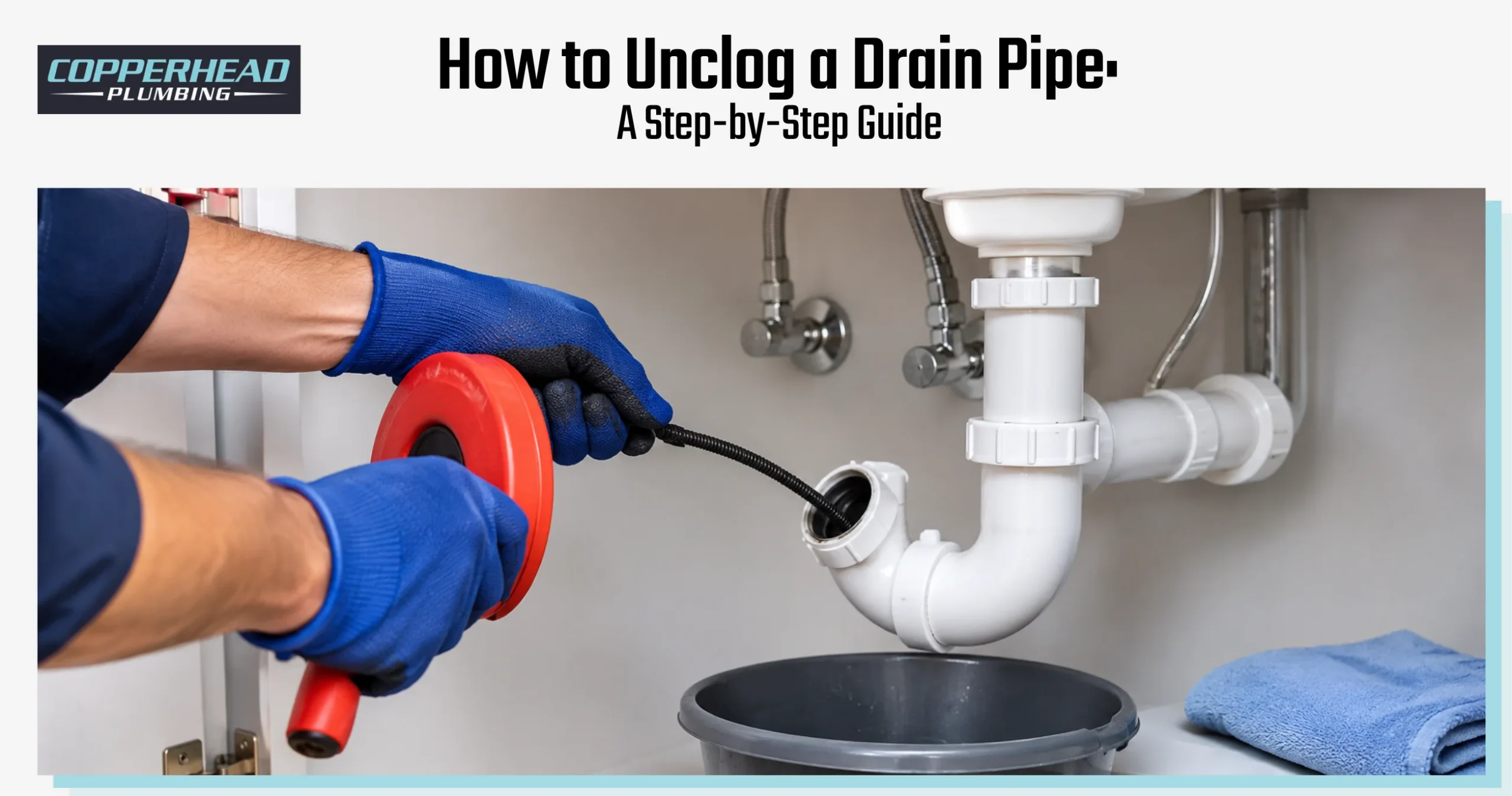
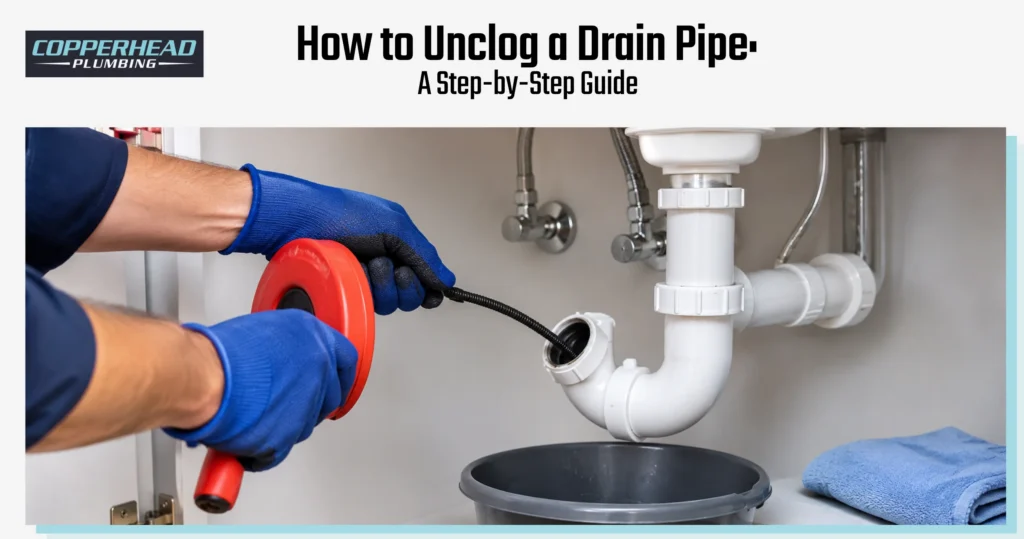
- Step 5: Remove the blockage with a drain snake or auger.
- Step 6: Clean the P-trap to remove trapped debris.
- Step 7: Flush the drain pipe and check the water flow.
Step 1: Identify the Location and Type of Drain Clog
Inspect the affected plumbing fixture and observe how water moves through the drain opening to identify the possible location of the blockage. Check for standing water, slow drainage, gurgling sounds, unpleasant odors, or wastewater returning through the fixture. Hair and soap scum commonly restrict bathroom drains, while grease and food debris frequently accumulate inside kitchen sink pipes. A sudden complete blockage may indicate a foreign object lodged inside a trap or pipe bend.
Check nearby fixtures to determine whether the obstruction affects one drain or several connected drain lines, provided there is no risk of sewage backup or overflow. If only one sink drains slowly, the blockage may be inside its stopper assembly, P-trap, or branch pipe. If multiple fixtures back up simultaneously, a shared drain or sewer line may be restricted. Stop using the plumbing system and contact a professional plumber when sewage backs up or wastewater enters another fixture.
Step 2: Remove Standing Water and Visible Debris
Remove excess standing water from the clogged sink, bathtub, or shower before attempting to clear visible debris. Wear protective gloves and safety glasses, and check whether chemical drain cleaners have already been used. If hazardous chemical residue or sewage-contaminated water is present, avoid handling the water or opening the drain. Otherwise, use a small container or suitable manual removal tool to transfer excess water into a bucket without spilling it onto the surrounding floor.
Remove the accessible drain stopper, strainer, or cover according to the fixture design. Inspect the opening for hair, food particles, soap scum, or small foreign objects that may restrict water flow. Use a plastic drain cleaning tool or suitable gripping tool to pull out trapped material without pushing it farther into the pipe. Dispose of the collected debris in household waste and wipe the opening clean. Removing accessible material may restore drainage immediately or improve access for a plunger or drain snake.
Step 3: Flush the Drain Pipe With Hot Water When Safe
Check the drain pipe material, fixture condition, and manufacturer’s guidance before using hot water to loosen a minor blockage. Hot water may soften some greasy residue or soap buildup, but excessive temperatures can damage certain plastic fittings, seals, or heat-sensitive plumbing components. Avoid pouring boiling water into PVC drain pipes unless the plumbing manufacturer specifically permits it. Do not add hot water when the drain contains chemical cleaner residue, sewage backup, or standing water that could overflow.
Use hot tap water at a temperature suitable for the plumbing system and pour it slowly into the drain opening. Allow the water to pass through the pipe while observing whether the drainage rate improves. A minor grease or soap residue restriction may loosen as warm water moves through the affected section. However, hot water cannot reliably remove compacted hair, tree roots, or solid foreign objects. If the water remains in the fixture or drains slowly, stop flushing and proceed to a suitable mechanical unclogging method.
Step 4: Use a Plunger to Loosen the Drain Clog
Select a plunger designed for the affected plumbing fixture before attempting to loosen the obstruction. A cup plunger generally suits flat sink and bathtub drain openings, while a flange plunger fits the curved outlet of a toilet bowl. Maintain enough water to cover the plunger cup without creating an overflow risk. For sinks with overflow openings, cover the openings with a damp cloth when appropriate to help direct pressure toward the blockage rather than allowing air to escape.
Position the plunger directly over the drain opening and press down to create a firm seal. Apply controlled pushing and pulling movements while keeping the rubber cup against the fixture surface. Alternating pressure and suction may loosen hair, soap scum, or other debris restricting the drain pipe. Lift the plunger carefully and observe whether the water begins draining normally. Repeat the process only when the fixture and pipe connections remain stable. Never plunge a drain containing chemical cleaner residue because the movement can splash hazardous substances.
Step 5: Remove the Blockage With a Drain Snake or Auger
Insert a compatible drain snake or hand auger into the drain opening to reach an obstruction beyond the accessible stopper or trap. Choose a flexible manual snake for suitable sink and bathtub drains, and use a toilet-specific auger when clearing a toilet trap. Feed the cable gradually into the pipe while maintaining control of the tool. Rotate the crank gently as the cable advances through suitable bends, and avoid forcing it through resistance that may indicate a fitting or damaged pipe.
When the cable reaches the blockage, rotate it carefully to hook, loosen, or break apart the trapped material. Withdraw the cable slowly and remove collected hair, grease, or other debris while wearing protective gloves. Repeat the procedure only if the cable moves freely and the pipe configuration allows safe operation. Test drainage with a controlled amount of water after removing the obstruction. If the snake repeatedly binds, cannot reach the clog, or fails to restore water flow, inspect an accessible P-trap or arrange professional drain cleaning.
Step 6: Clean the P-Trap to Remove Trapped Debris
Locate the curved P-trap beneath the clogged kitchen or bathroom sink and inspect its connections before disassembly. The P-trap retains water to block sewer gases from entering the room, but its curved section can also collect hair, grease, food particles, and foreign objects. Place a bucket directly beneath the trap to collect retained water and debris. Confirm that no hazardous chemical drain cleaner or sewage-contaminated wastewater is present before loosening any plumbing connections.
Support the drain pipe and carefully loosen the P-trap’s compatible slip-joint nuts by hand or with adjustable pliers. Remove the curved section, empty its contents into the bucket, and clean accumulated material from the interior. Inspect the washers, seals, and accessible fittings for deterioration or damage before reinstalling the trap. Reconnect the components in their original positions and tighten the fittings without overtightening plastic connections. Run water through the sink and inspect the joints for leaks. Do not attempt this procedure on concealed bathtub traps or toilet drain assemblies.
Step 7: Flush the Drain Pipe and Check the Water Flow
Run a controlled amount of water through the cleared drain pipe to confirm that the obstruction has been removed. Before testing, verify that the drain snake has been withdrawn, visible debris has been discarded, and any disconnected P-trap or drain components have been securely reassembled. Turn on the faucet or introduce water into the fixture while observing whether it passes through the drain opening without accumulating. Normal drainage should occur without repeated gurgling, persistent standing water, or wastewater returning through the fixture.
Continue monitoring the fixture for several minutes to identify remaining restrictions or leaks. Inspect accessible P-trap connections, slip-joint nuts, and other disturbed fittings for dripping or moisture. If the original problem involved slow drainage, compare the water flow with the fixture’s normal operation. A recurring backup, persistent gurgling sound, or newly developed leak may indicate an unresolved obstruction or damaged connection. Stop further DIY cleaning if the problem persists and arrange professional inspection of the affected drain line.
What Tools Do You Need to Unclog a Drain Pipe?
Unclogging a drain pipe requires a cup or flange plunger, drain snake, plastic drain cleaning tool, bucket, adjustable pliers, protective gloves, and safety glasses. The specific tools depend on whether the blockage involves hair near a drain stopper, grease inside a P-trap, or an obstruction farther along the drain line. Having suitable equipment ready before starting helps remove debris without unnecessary disassembly, excessive force, or damage to plumbing fixtures.
5 main tools and equipment groups needed to unclog a drain pipe are:
1. Cup Plunger or Flange Plunger
A plunger creates alternating pressure and suction to loosen certain obstructions inside a drain pipe. A cup plunger has a flat rubber rim suitable for many sink and bathtub drain openings, while a flange plunger includes an extended section designed to seal against a toilet outlet. Choosing the correct plunger helps direct pressure toward the blockage. Apply controlled movements and avoid excessive force that could disturb loose pipe connections. Never plunge a drain containing hazardous chemical cleaner residue.
2. Drain Snake or Hand Auger
A drain snake uses a flexible cable to reach blockages located beyond the drain opening or accessible P-trap. A hand auger includes a crank that rotates the cable while it advances through compatible pipe bends. The cable may hook hair, loosen compacted debris, or break apart certain obstructions that a plunger cannot remove. Select a cable appropriate for the fixture and pipe diameter. Avoid forcing the snake through resistance because the tool can damage fittings or become trapped inside the plumbing system.
3. Plastic Drain Cleaning Tool
A plastic drain cleaning tool removes accessible hair and loose debris from bathroom sink, bathtub, and shower drain openings. Many designs have small barbs that catch hair trapped around stoppers or strainers. Insert the tool gradually into a compatible opening and withdraw it carefully to extract the collected material. This method works best for shallow hair clogs rather than deep pipe obstructions. Dispose of the debris in household waste and avoid pushing compacted material farther into the drain.
4. Bucket and Adjustable Pliers
A bucket collects standing water and trapped debris when cleaning an accessible sink P-trap or disconnecting a suitable drain connection. Position the bucket beneath the pipe before loosening fittings to prevent wastewater from spreading across the floor. Adjustable pliers provide controlled grip when slip-joint nuts cannot be loosened by hand. Support the adjoining pipe while turning the fitting, and avoid overtightening plastic connections during reassembly because excessive pressure can damage the nut or seal.
5. Protective Gloves, Safety Glasses, and Towels
Protective gloves reduce direct contact with wastewater, grease, hair, and debris during drain cleaning. Safety glasses help protect the eyes from splashes when removing standing water, operating a drain snake, or opening accessible plumbing connections. Absorbent towels contain minor spills and dry pipe fittings before leak inspection. These items support routine drain maintenance but do not make sewage contamination or hazardous chemical exposure safe. Stop work when the drain contains unknown chemical residue or contaminated wastewater.
What Safety Precautions Should You Take Before Unclogging a Drain Pipe?

Safety precautions before unclogging a drain pipe include wearing protective gear, checking for chemical residues, avoiding chemical mixing, protecting plumbing fixtures, preventing electrical hazards, containing wastewater, and knowing when to call a plumber. These precautions help prevent chemical burns, sewage exposure, electrical shocks, and pipe damage. Following proper safety measures allows homeowners to assess drain conditions and choose appropriate cleaning methods before attempting to remove a blockage.
7 safety precautions to follow before unclogging a drain pipe are:
1. Wear protective gloves and safety glasses
Use protective gloves when handling drain stoppers, removing hair, opening a P-trap, or operating a drain snake. Drain wastewater can contain grease, bacteria, sharp debris, and cleaning substances that may irritate the skin. Safety glasses protect against splashes when retained water escapes from a pipe connection. Wash your hands thoroughly after handling contaminated tools or materials, even when gloves were worn during the procedure.
2. Check for chemical drain cleaner residue
Determine whether a liquid or powdered drain cleaner has already been added to the clogged pipe. Chemical products may remain concentrated in standing water when the obstruction prevents normal drainage. Plunging, snaking, or disconnecting the P-trap can release hazardous liquid unexpectedly. If a chemical cleaner is present, follow the product’s safety instructions and avoid mechanical cleaning until the exposure risk has been addressed.
3. Never mix drain-cleaning chemicals
Do not combine commercial drain cleaners with vinegar, bleach, ammonia, or other household cleaning substances. Some combinations can generate heat, irritating gases, or dangerous chemical reactions. Adding another cleaner to an already blocked drain may also increase the amount of hazardous liquid trapped inside the pipe. Use only products that are compatible with the plumbing system and follow the manufacturer’s directions without combining treatments.
4. Protect pipes and plumbing fixtures
Check the pipe material and fixture design before applying hot water, plunging pressure, or mechanical tools. Boiling water may damage certain plastic fittings or seals, while excessive force from a drain snake can affect vulnerable joints and pipe bends. Use a toilet-specific auger for toilet clogs to reduce the risk of scratching the bowl. Stop when equipment binds or encounters unexplained resistance.
5. Keep electrical equipment away from water
Avoid operating ordinary electrical tools near standing wastewater or wet floor surfaces. A wet/dry vacuum must be specifically rated and configured for liquid pickup before it is used on a suitable drain. Keep electrical connections dry and follow the equipment manufacturer’s instructions. Disconnect nearby appliances when water exposure creates a hazard, particularly when inspecting washing machine drainage components.
6. Contain wastewater before opening a pipe
Place a bucket beneath an accessible sink P-trap and keep towels ready before loosening drain connections. Retained water and debris may spill when the curved section is removed. Empty the trap slowly and keep collected waste away from food preparation areas. Do not disassemble a pipe that contains sewage-contaminated wastewater or hazardous chemical residue without appropriate professional precautions.
7. Recognize when professional help is necessary
Stop DIY drain cleaning when multiple fixtures back up, sewage enters a bathtub or floor drain, or the obstruction cannot be reached safely. These conditions may indicate a deeper blockage in a shared drain or sewer line. Repeatedly applying pressure or chemicals can create additional hazards without resolving the underlying problem. A professional plumber can inspect the drainage system and select suitable equipment for the blockage.
What Causes a Drain Pipe to Clog?
Common causes of a clogged drain pipe are hair and soap scum buildup, grease and food debris, foreign objects, mineral deposits, and tree root intrusion. These materials accumulate inside drain pipes, restrict wastewater flow, and cause slow drainage or complete blockages. Identifying the cause helps homeowners choose suitable drain cleaning methods, remove stubborn clogs, and prevent recurring plumbing problems in kitchen sinks, bathroom drains, and sewer lines.
5 common causes of a clogged drain pipe are:
1. Hair and Soap Scum Buildup
During bathing and washing, loose hair enters bathroom sink, shower, and bathtub drains and becomes trapped around stoppers, strainers, and pipe bends. Soap residue sticks to the trapped strands, forming dense deposits that gradually restrict wastewater flow. As the buildup increases, water drains more slowly and may eventually stop flowing through the pipe. Using a plastic drain cleaning tool to extract trapped hair and regularly cleaning drain strainers helps prevent these blockages.
2. Grease, Oil, and Food Debris
Kitchen sink drains become clogged when cooking fats and oils cool, stick to interior pipe surfaces, and trap food particles. These deposits accumulate inside P-traps and branch drain pipes, gradually narrowing the passage available for wastewater. Repeatedly rinsing greasy cookware and food scraps into the sink increases the risk of persistent drainage problems. Removing accessible deposits and disposing of cooking grease in a suitable waste container helps prevent recurring kitchen drain clogs.
3. Foreign Objects and Non-Flushable Materials
Items such as small toys, cotton swabs, hygiene products, paper towels, and wet wipes can become lodged inside toilet traps and drain pipe bends. Many of these materials do not disintegrate readily in water, allowing additional waste to accumulate around the obstruction. A trapped object can cause sudden drainage failure, standing water, or repeated toilet backups. Removing accessible objects with suitable tools or arranging professional extraction may be necessary when the blockage cannot be reached safely.
4. Mineral Deposits and Pipe Scaling
Dissolved minerals in water may accumulate on certain pipe surfaces under conditions that promote scale formation. These deposits can reduce the internal pipe diameter and create rough surfaces that catch grease, hair, and other debris. Older plumbing systems with existing restrictions may experience slower drainage as mineral deposits increase. However, not every slow drain results from scaling, so identifying the underlying cause may require evaluating water conditions and inspecting the affected pipe.
5. Tree Root Intrusion in Underground Drain Lines
Underground sewer pipes can develop root-related blockages when nearby tree roots enter through cracks, damaged joints, or other openings. The roots grow inside the pipe and collect toilet paper, grease, and wastewater debris, gradually restricting drainage. This obstruction can cause recurring clogs, gurgling sounds, and sewage backups across multiple plumbing fixtures. A professional sewer camera inspection can locate the affected section and determine whether root removal, drain cleaning, or pipe repair is necessary.
What Are the Other Methods to Unclog a Drain Pipe?
Alternative methods for unclogging a drain pipe include using baking soda and vinegar, applying homemade drain cleaners, removing debris with a wet/dry vacuum, and using liquid drain cleaners. Each technique targets specific types of buildup, such as grease, soap residue, or loose organic matter. Choosing an appropriate method depends on the clog’s severity, pipe material, and blockage location. Stubborn obstructions may require mechanical drain cleaning.
How to Unclog a Drain Pipe With Baking Soda and Vinegar?
To unclog a drain pipe with baking soda and vinegar, remove visible debris, pour baking soda into the drain, add vinegar, allow the mixture to react, and flush with warm water. The fizzing reaction may loosen minor soap residue and surface buildup but cannot reliably dissolve compacted hair, hardened grease, or foreign objects. This homemade cleaning method is best suited for minor residue in drains free from chemical cleaners and sewage contamination.
Steps to use baking soda and vinegar for minor drain residue include:
- Remove the drain stopper or strainer and clear visible hair, food particles, and other debris from the drain opening.
- Check that the drain contains no chemical cleaner residue, bleach, or sewage-contaminated wastewater before applying the mixture.
- Pour a small amount of baking soda directly into the drain opening without forcing it through a complete blockage.
- Add vinegar to the drain and allow the fizzing reaction to finish without sealing the opening.
- Flush the drain with plumbing-safe warm water and check whether water flows freely through the pipe.
How to Unclog a Drain Pipe With Homemade Drain Cleaners?
To unclog a drain pipe with homemade drain cleaners, remove visible debris, add a small amount of dish soap, pour warm water into the drain, allow it to loosen greasy residue, and check the water flow. This method may help clear minor grease and soap buildup in kitchen sink drains but cannot remove deep blockages. Avoid mixing household chemicals or applying homemade solutions over existing chemical drain cleaner residue.
Below are 5 steps to use a mild homemade drain-cleaning method:
- Check whether the drain contains grease, soap residue, hair, or foreign objects to determine if a homemade cleaner is suitable.
- Remove the drain strainer and clear visible food particles, hair, and other debris from the opening.
- Confirm that the drain pipe, seals, and plumbing fixtures can safely handle warm water before applying the cleaning solution.
- Pour a small amount of dish soap into the drain, followed by warm water, to loosen minor grease buildup.
- Run a small amount of water through the drain to check whether drainage improves or the blockage remains.
How to Unclog a Drain Pipe With a Wet/Dry Vacuum?
To unclog a drain pipe with a wet/dry vacuum, configure the equipment for liquid pickup, remove the drain cover, position the hose over the opening, establish a secure seal, and activate suction to extract trapped debris. This approach helps dislodge loose hair, food particles, and minor obstructions near the drain entrance. Before starting, ensure the drain contains no chemical cleaner residue or sewage, and keep electrical connections dry.
Here are the steps to unclog a suitable drain with a wet/dry vacuum:
- Confirm that the wet/dry vacuum supports liquid pickup and prepare the collection tank, filter, and hose according to the manufacturer’s instructions.
- Keep electrical connections dry and ensure the drain contains no hazardous chemicals or sewage-contaminated water.
- Remove the drain stopper or strainer and clear visible debris that could obstruct the vacuum hose.
- Position the vacuum hose over the drain opening, create a secure seal, and apply controlled suction to extract trapped debris.
- Turn off the vacuum, inspect the collected material, and run a small amount of water to check whether the blockage has cleared.
How to Unclog a Drain Pipe With Liquid Drain Cleaners?
To unclog a drain pipe with liquid drain cleaners, identify the blockage, select a pipe-compatible product, check for previous chemical use, apply the recommended amount, and follow the manufacturer’s flushing instructions. These products cannot reliably remove foreign objects or tree roots. Avoid mixing cleaners, and wear protective gloves and safety glasses during application.
5 precautions when using a compatible liquid drain cleaner are:
- Read the product label to identify whether the drain cleaner is chemical or enzyme-based and which types of buildup it removes.
- Verify that the drain cleaner is compatible with the pipe material, plumbing fixtures, garbage disposal, and septic system.
- Ensure that no drain cleaner from a previous application remains inside the pipe to prevent hazardous chemical reactions caused by mixing cleaning products.
- Apply the recommended amount of drain cleaner while wearing protective equipment and following the manufacturer’s specified contact time.
- Flush the drain according to the product instructions and avoid mechanical cleaning while hazardous chemical residue remains inside the pipe.
How to Unclog Different Types of Drain Pipes?
To unclog different types of drain pipes, remove accessible debris and use a suitable cleaning tool based on the drain type and blockage. Kitchen sink drains often require grease and food debris removal, while bathroom sink and bathtub drains need hair and soap scum extraction. Toilet clogs can be cleared with a flange plunger or toilet auger, while washing machine drains may require filter, hose, or standpipe cleaning. Selecting the appropriate method helps restore wastewater flow without damaging plumbing components.
How to Unclog a Kitchen Sink Drain Pipe?
To unclog a kitchen sink drain pipe, remove standing water and food debris, inspect the garbage disposal, use a cup plunger, clean the P-trap, and clear deeper clogs with a drain snake. These steps remove grease buildup, food particles, and obstructions restricting wastewater flow. Kitchen sink clogs typically develop near the drain opening, inside the P-trap, or along the branch drain line.
Follow these 5 steps to unclog a kitchen sink drain pipe:
- Remove excess standing water with a bucket and clear food scraps, grease, and other debris from the kitchen sink strainer.
- Disconnect the garbage disposal from its power source and inspect it for jams according to the manufacturer’s instructions.
- Position a cup plunger over the drain opening, seal the second basin if present, and apply controlled pressure to loosen the blockage.
- Place a bucket beneath the P-trap, disconnect the fittings, remove trapped debris, and securely reassemble the pipe connections.
- Insert a compatible drain snake through an appropriate access point to clear deeper clogs, then run water to check drainage and leaks.
How to Unclog a Bathroom Sink Drain Pipe?
To unclog a kitchen sink drain pipe, remove standing water and food debris, check the garbage disposal, use a cup plunger, clean the P-trap, and remove deeper blockages with a drain snake. This process clears grease buildup, trapped food particles, and other obstructions that restrict drainage. Kitchen sink clogs often occur near the drain opening, within the P-trap, or farther along the branch drain pipe.
Here are the steps to unclog a bathroom sink drain pipe:
- Remove excess standing water from the bathroom sink using a suitable container after confirming no hazardous chemicals or sewage contamination are present.
- Detach the pop-up drain stopper or removable cover carefully without damaging the linkage or sealing components.
- Insert a plastic drain cleaning tool into the opening and extract accumulated hair, soap scum, and trapped debris.
- Place a bucket beneath the P-trap, disconnect the curved pipe, remove accumulated debris, and securely reinstall the fittings.
- Run water through the bathroom sink to confirm proper drainage and inspect the P-trap connections for leaks.
How to Unclog a Bathtub Drain Pipe?
To unclog a bathtub drain pipe, remove standing water, detach the drain stopper, extract trapped hair and soap scum, use a plunger or drain snake, and test the water flow. These steps help clear blockages caused by accumulated hair, soap residue, and other debris. Bathtub clogs usually form around the drain opening, beneath the stopper, or deeper inside the concealed drain pipe.
Below are the 5 steps to unclog a bathtub drain pipe:
- Remove excess standing water from the bathtub using a suitable container to expose the drain opening safely.
- Detach the bathtub drain stopper or strainer according to its design without damaging the drain components.
- Insert a plastic drain cleaning tool into the opening and extract trapped hair, soap scum, and other debris.
- Seal the overflow opening and use a plunger to loosen the blockage, or insert a compatible drain snake if necessary.
- Run water through the bathtub drain to confirm proper drainage and check for standing water, gurgling, or wastewater backup.
How to Unclog a Toilet Drain Pipe?
To unclog a toilet drain pipe, prevent wastewater overflow, check for visible obstructions, use a flange plunger, remove stubborn blockages with a toilet auger, and test the flushing system. These steps help clear excessive toilet paper, wet wipes, and foreign objects trapped inside the toilet drain. Avoid repeated flushing when water rises, as this can cause overflow and spread contaminated wastewater across the bathroom floor.
5 steps to unclog a toilet drain pipe are:
- Stop flushing the toilet when the water level rises and close the shutoff valve if necessary to prevent overflow.
- Wear protective gloves and remove visible foreign objects without pushing them deeper into the toilet trap.
- Position a flange plunger inside the toilet outlet and apply controlled pushing and pulling movements to loosen the blockage.
- Insert a toilet auger into the trap way and rotate the cable carefully to remove stubborn obstructions without scratching the bowl.
- Flush the toilet once the water level returns to normal and confirm that wastewater drains without backing up.
How to Unclog a Washing Machine Drain Pipe?
To unclog a washing machine drain pipe, disconnect the appliance, clean the pump filter, inspect the drain hose, remove debris from the standpipe, and test the drainage system. These steps help clear lint, detergent buildup, and foreign objects that restrict wastewater flow. Washing machine drainage problems may also result from a kinked hose, blocked filter, or obstruction inside the connected household drain pipe.
Steps to unclog a washing machine drain pipe include:
- Turn off the washing machine, disconnect its electrical power, and follow the manufacturer’s instructions for safely draining retained water.
- Place towels and a container beneath the accessible pump filter, then remove accumulated lint, coins, and other debris.
- Inspect the washing machine drain hose for kinks, crushing, or blockages, and disconnect it only when permitted by the manufacturer.
- Check the household drain standpipe for lint and detergent buildup, and remove accessible obstructions using a suitable drain cleaning tool.
- Reconnect the drain hose and pump filter, run a drain cycle, and inspect the system for leaks or wastewater overflow.
How to Unclog a Drain Pipe With a Stubborn Blockage?
Four ways to address a stubborn drain pipe blockage include locating deep clogs, removing standing water, investigating recurring blockages, and troubleshooting unsuccessful drain snaking. Stubborn clogs often involve compacted hair, hardened grease, foreign objects, or tree roots that restrict wastewater flow. When conventional drain cleaning methods fail, identifying the blockage location and underlying cause helps determine whether professional plumbing services are necessary.
How to Find a Clog Deep Inside a Drain Pipe?
To find a clog deep inside a drain pipe, check affected fixtures, inspect drain openings, examine the P-trap, evaluate drainage symptoms, and arrange a plumbing camera inspection if necessary. Deep blockages often involve compacted grease, foreign objects, or tree roots that restrict wastewater flow. When several fixtures experience simultaneous backups, the obstruction may lie within a shared drain line rather than an individual fixture.
Follow these 5 steps to locate a deep drain pipe clog:
- Check whether a single sink, multiple drains, or an entire bathroom experiences slow drainage or wastewater backup.
- Inspect accessible drain openings and remove visible hair, food particles, and other debris from stoppers and strainers.
- Examine the removable sink P-trap for trapped debris after confirming no hazardous chemical residue or sewage contamination is present.
- Assess whether the blockage extends into the branch pipe or shared drain line when drainage remains slow after cleaning the P-trap.
- Contact a professional plumber for a drain camera inspection to locate deep obstructions, damaged pipe fittings, or tree root intrusion.
How to Unclog a Drain Pipe With Standing Water?
To unclog a drain pipe with standing water, stop the water supply, check for contamination, remove excess water, clear visible debris, and use a plunger or drain snake to dislodge the blockage. Standing water typically indicates an obstruction preventing normal wastewater flow. Before attempting drain cleaning, check for chemical cleaner residue or sewage contamination, as these conditions require additional safety precautions.
Steps to unclog a drain pipe with standing water are:
- Turn off the faucet or stop using the affected plumbing fixture to prevent standing water from overflowing.
- Check whether the standing water contains chemical drain cleaner residue or sewage contamination before attempting removal.
- Transfer excess standing water into a bucket using a suitable container or manual water removal tool.
- Remove the drain stopper or strainer and extract visible hair, grease, food particles, and other trapped debris.
- Use a suitable plunger or drain snake to loosen the blockage, then run a small amount of water to test drainage.
How to Unclog a Drain Pipe That Keeps Getting Clogged?
To unclog a drain pipe that keeps getting clogged, identify the affected fixture, examine trapped debris, clean accessible components, review drain-use habits, and arrange professional inspection if necessary. Recurring blockages often result from grease buildup, foreign objects, damaged pipe joints, or tree roots. Although routine cleaning may temporarily restore drainage, persistent clogs can indicate deeper obstructions or structural problems requiring professional attention.
Below are the steps to investigate recurring drain clogs:
- Identify whether the same kitchen sink, bathroom sink, bathtub, toilet, or washing machine drain experiences recurring blockages.
- Inspect removed debris to determine whether hair, grease, food particles, or other materials repeatedly cause the drain to clog.
- Clean accessible drain strainers, stoppers, and removable P-traps to eliminate accumulated debris and residue.
- Prevent recurring clogs by keeping cooking grease out of sinks, removing hair from bathroom drains, and avoiding non-flushable toilet waste.
- Contact a professional plumber to inspect the drain line for hidden obstructions or structural damage if blockages return after cleaning.
What to Do When a Drain Snake Cannot Clear a Drain Pipe?
When a drain snake cannot clear a drain pipe, stop advancing the cable, withdraw the tool carefully, inspect the access point, assess the remaining blockage, and contact a professional plumber if necessary. Drain snakes may fail against deep obstructions, solid objects, or damaged pipe sections. Forcing the cable through resistance can damage plumbing fittings or trap the tool inside the drain.
Here are the 5 steps when a drain snake fails to remove a blockage:
- Stop advancing the drain snake when the cable repeatedly binds or encounters unexplained resistance to prevent pipe damage.
- Carefully rotate and withdraw the drain snake according to the manufacturer’s instructions, then inspect the auger head for trapped debris.
- Check whether the drain snake entered through a suitable opening or whether an accessible cleanout provides a better access point.
- Assess whether the drain remains slow, completely blocked, or causes wastewater backup in nearby plumbing fixtures.
- Contact a professional plumber to inspect the drain pipe with a plumbing camera or remove stubborn obstructions using a motorized drain auger.
When Should You Call a Professional Plumber to Unclog a Drain Pipe?
Call a professional plumber if you have multiple drains backing up, recurring blockages, sewage backup or foul odors, deep clogs, or unsuccessful DIY drain cleaning. These problems may indicate damaged pipes, tree root intrusion, or obstructions in shared sewer lines. Professional drain cleaning services use specialized equipment, such as drain cameras, motorized augers, and hydro jetting, to identify and remove stubborn blockages.
5 signs that a clogged drain pipe needs a professional plumber are:
1. Multiple Drains Backing Up
Check whether several fixtures experience slow drainage, gurgling, or wastewater backup simultaneously. Water rising in a bathtub when a toilet flushes may indicate a shared drain blockage. Stop using affected fixtures and contact a plumber to inspect the drainage system.
2. Recurring Drain Blockages
Monitor drains that become clogged again shortly after plunging, snaking, or cleaning. Repeated blockages may result from grease buildup, damaged pipe joints, or tree roots. Arrange a professional inspection to identify the underlying cause and determine whether cleaning or repair is necessary.
3. Sewage Backup or Foul Odors
Stop using plumbing fixtures when sewage backs up through toilets, showers, bathtubs, or floor drains. Contaminated wastewater may contain harmful microorganisms, while persistent odors accompanied by drainage problems can indicate an obstruction. Avoid direct contact with sewage and contact a professional plumber.
4. Deep or Hard-to-Reach Drain Clogs
Check whether the obstruction extends beyond the P-trap into concealed branch pipes or the main sewer line. Deep blockages may prevent household drain snakes from reaching trapped debris. Avoid forcing cleaning tools and hire a plumber with suitable inspection and drain-cleaning equipment.
5. Unsuccessful DIY Drain Unclogging
Contact a plumber when plunging, P-trap cleaning, or drain snaking fails to restore normal wastewater flow. Persistent standing water, repeated backups, or leaking connections may indicate deeper obstructions or pipe damage. Avoid excessive force and repeated chemical treatments until the problem is diagnosed.
How Do Professional Plumbers Unclog Drain Pipes?
Professional plumbers unclog drain pipes by assessing drainage problems, locating access points, identifying blockages, evaluating pipe conditions, selecting cleaning equipment, removing obstructions, and verifying water flow. They use specialized tools, including motorized drain augers, hydro jetting equipment, and sewer cameras, to clear stubborn clogs. The chosen method depends on the blockage type, pipe material, and condition of the drainage system.
7 stages of professional drain pipe cleaning are:
1. Assess the Drainage Problem
Examine the affected plumbing fixtures for standing water, gurgling sounds, recurring clogs, or wastewater backup. The plumber checks whether one or multiple drains are affected to identify a localized blockage or shared drain restriction. Previous chemical drain cleaner use is also assessed to ensure safe cleaning.
2. Locate a Suitable Access Point
Identify an accessible cleanout, drain opening, or pipe connection that allows cleaning equipment to reach the obstruction. The plumber selects an entry point based on the drainage layout, pipe diameter, and available access. Suitable access reduces unnecessary plumbing disassembly and potential damage.
3. Identify the Suspected Blockage
Inspect the drainage system to determine the location and likely cause of the obstruction. A plumbing camera may reveal accumulated debris, tree roots, damaged joints, or other restrictions inside the pipe. These findings help the plumber select an appropriate cleaning or repair method.
4. Evaluate the Drain Pipe Condition
Check the pipe material, age, diameter, joints, and visible deterioration before applying mechanical force or water pressure. Cracks, corrosion, collapsed sections, or displaced connections may make certain cleaning methods unsuitable. Significant structural damage may require pipe repair instead of routine drain cleaning.
5. Select the Appropriate Cleaning Equipment
Choose a motorized drain auger, hydro jetting equipment, or extraction tool based on the blockage type and pipe condition. Motorized augers can remove certain compacted obstructions, while hydro jetting clears grease, sludge, and deposits from compatible pipes. The plumber avoids methods that could damage weakened plumbing components.
6. Remove the Drain Obstruction
Operate the selected cleaning equipment through a suitable access point to loosen, extract, cut, or flush away trapped material. Mechanical augers can break through certain debris and root obstructions, while hydro jetting removes deposits using controlled water pressure. Structural defects discovered during cleaning may require additional repairs.
7. Flush and Verify the Drain
Test water flow through the affected fixtures to confirm that wastewater drains without standing water, gurgling, or backup. The plumber also checks accessible pipe connections for leaks and may perform a follow-up camera inspection when necessary. Persistent restrictions or visible damage may require further plumbing work.
How Much Does a Plumber Charge to Unclog a Drain Pipe?
A plumber charges $100 to $300 to unclog a standard sink or bathtub drain, $150 to $600 for main sewer line cleaning, and $600 to $1,400 for hydro jetting. Drain cleaning costs depend on clog severity, blockage location, pipe accessibility, and equipment requirements. Basic drain snaking typically costs less than hydro jetting, which removes stubborn grease, sludge, and debris from sewer pipes. Emergency service fees, sewer camera inspections, and pipe repairs increase the total bill. Homeowners should request an itemized estimate covering labor, equipment, diagnostic fees, and additional services before hiring a plumber.
How Can You Prevent Drain Pipes From Clogging Again?
To prevent drain pipes from clogging again, install drain strainers, keep grease and food waste out of sinks, remove hair from bathroom drains, flush only appropriate toilet waste, maintain washing machine drainage components, and inspect drains regularly. These preventive measures reduce debris accumulation, grease buildup, and recurring blockages. Regular drain maintenance also helps identify slow drainage early and maintain proper wastewater flow throughout the plumbing system.
6 ways to prevent drain pipes from clogging again are:
1. Install Drain Strainers and Screens
Place suitable strainers over kitchen sink, bathroom sink, bathtub, and shower drains to catch debris before it enters the pipes. Kitchen strainers collect food particles, while bathroom screens trap loose hair. Empty and clean these strainers regularly to prevent buildup and maintain proper water flow.
2. Keep Grease, Oil, and Food Waste Out of Kitchen Drains
Prevent kitchen drain clogs by disposing of cooking grease, oil, and food scraps instead of washing them into the sink. Grease can accumulate along pipe walls and trap food particles, gradually restricting wastewater flow. Allow cooking fats to cool before disposing of them according to local requirements, and scrape food waste from dishes before rinsing.
3. Remove Hair From Bathroom Drains
Clear accumulated hair from bathroom sink stoppers, shower screens, and bathtub strainers before it enters deeper drain pipes. Hair combines with soap scum and forms dense blockages around drain components and P-traps. Use a suitable plastic drain cleaning tool to extract accessible debris when drainage begins to slow.
4. Flush Only Appropriate Waste Down Toilets
Dispose of human waste and toilet paper through the toilet while keeping wet wipes, paper towels, hygiene products, and foreign objects out of the plumbing system. These materials can become trapped inside toilet bends and sewer pipes, causing stubborn blockages. Place non-flushable waste in a suitable bin, including products marketed as flushable.
5. Maintain Washing Machine Drainage Components
Inspect the washing machine pump filter, drain hose, and standpipe according to the manufacturer’s instructions. Lint, detergent residue, and small objects can restrict drainage or accumulate inside connected pipes. Remove accessible debris, straighten kinked hoses, and arrange household drain inspection if the standpipe repeatedly backs up.
6. Inspect Drains for Early Signs of Blockage
Check household drains regularly for slow water flow, standing water, gurgling sounds, and recurring unpleasant odors. These symptoms may indicate debris accumulation, partial blockages, or deeper drainage restrictions. Remove accessible buildup with suitable tools and contact a professional plumber if multiple fixtures back up or clogs repeatedly return.