Skip to content
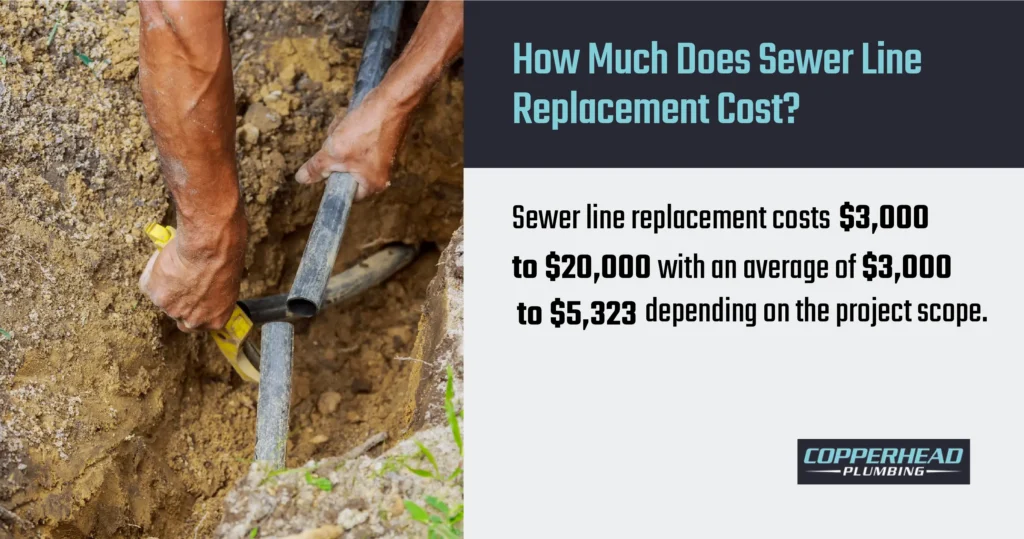
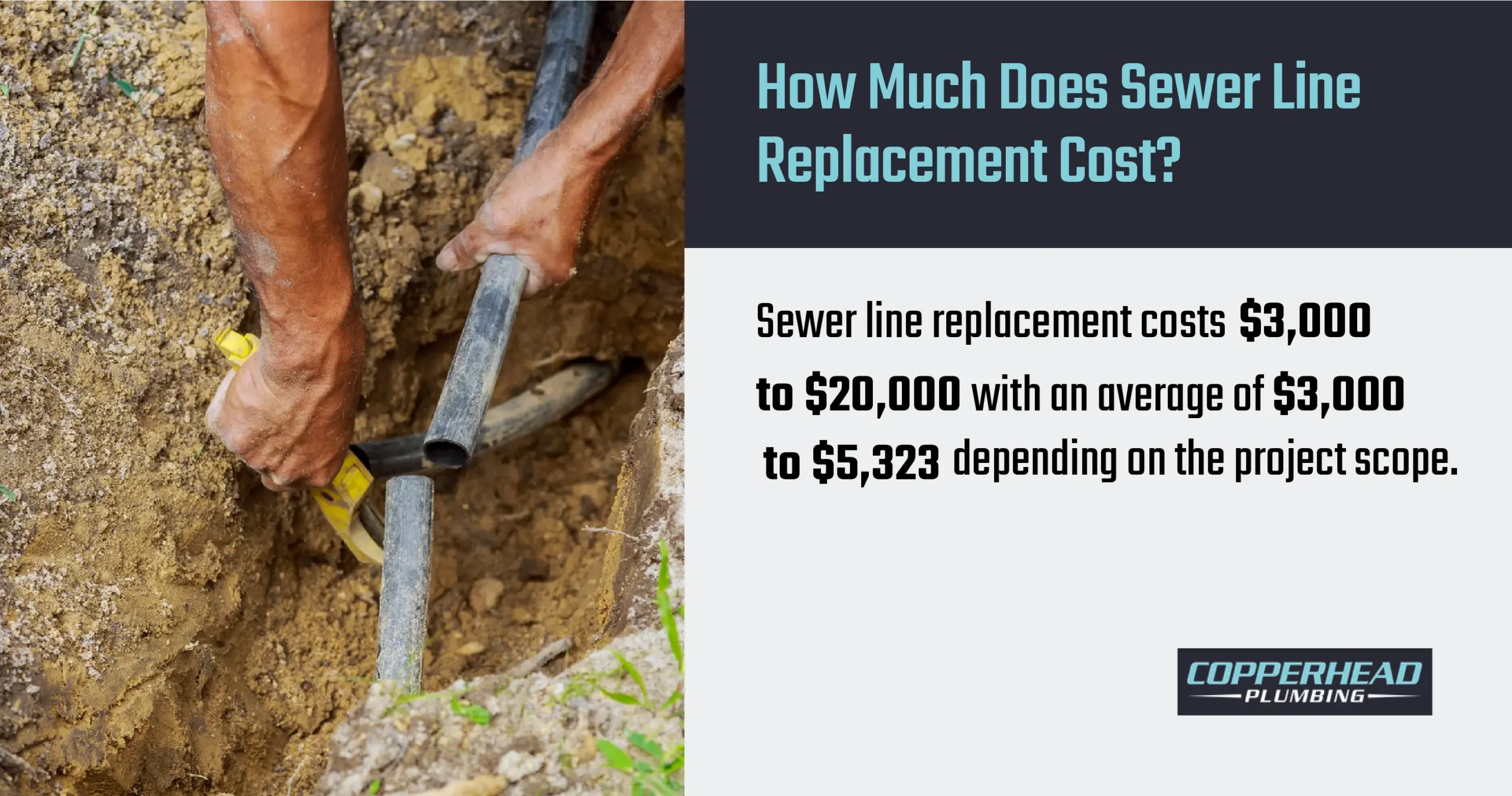
Sewer line replacement costs $3,000 to $20,000, with an average of $3,000 to $5,323 depending on the project scope. Complete replacements cost more than partial replacements, and method choice also impacts pricing, as traditional trenching is lower-cost than trenchless options like CIPP, pipe bursting, and sliplining, which require specialized equipment.
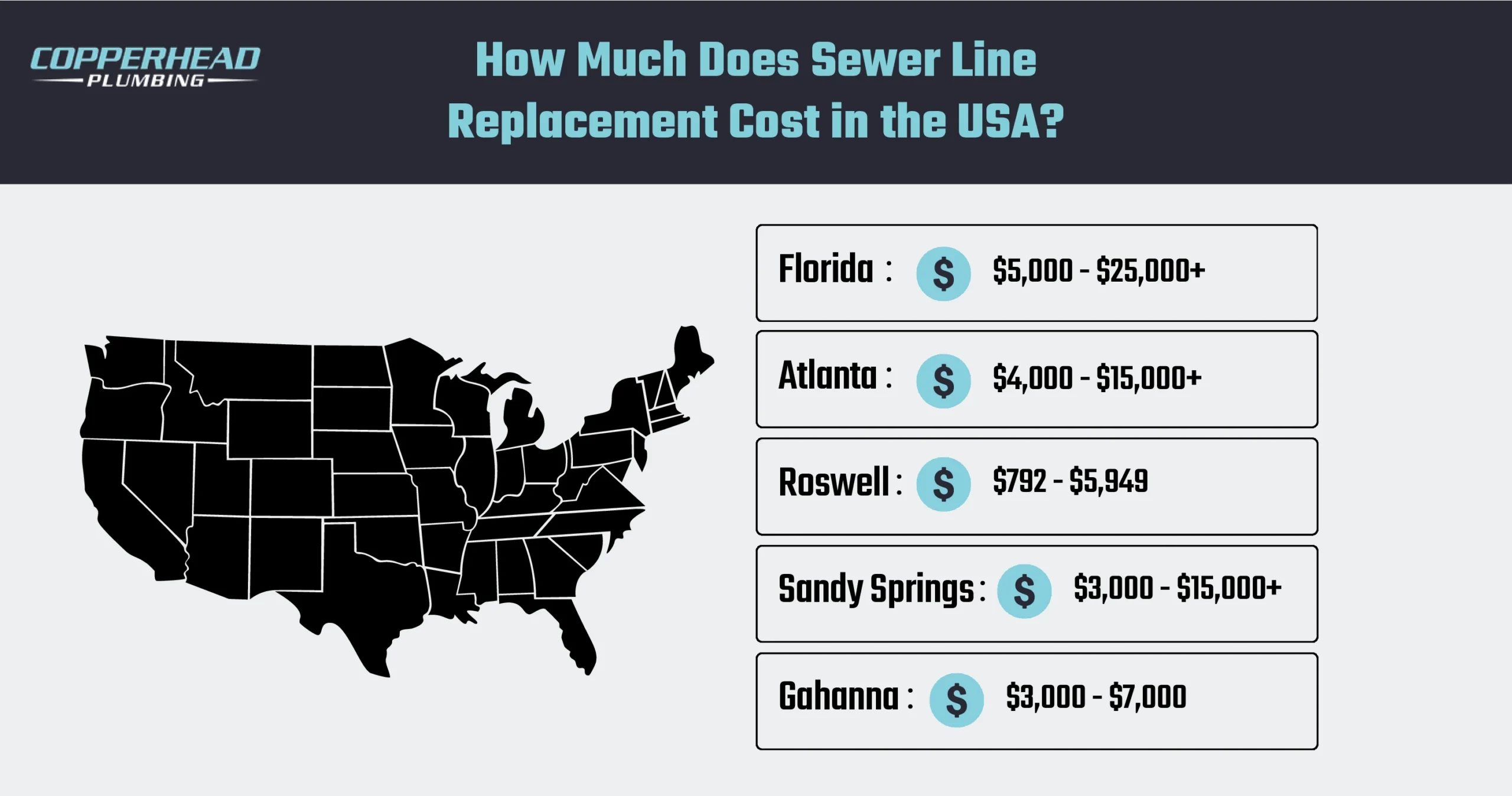
Beyond methods and project scope, the cost of sewer line replacement also depends on the pipe material used. PVC and ABS offer lower-cost options, while cast iron, Orangeburg, clay, and concrete increase total project cost due to durability and installation complexity. Across the USA, pricing varies by location, with Florida showing higher costs, Atlanta and Sandy Springs in mid-range, and Roswell and Gahanna reflecting lower to moderate sewer line replacement costs.
What Is the Average Sewer Line Replacement Cost?
The average cost of a sewer line replacement ranges from $3,000 to $5,323. This cost range includes various project types, such as partial replacement, full sewer line replacement, variations in pipe material, replacement method, labor, and inspection costs, including camera inspection used to detect pipe damage and locate the sewer line. In a normal project, the final line replacement cost can stay near the lower end for a short, accessible line, while a deeper, obstructed, or labor-intensive sewer system project can move toward the higher end.
How Much Does a Complete Sewer Line Replacement Cost?
A complete sewer line replacement costs $3,000 to $10,000, depending on pipe length, depth, property access, replacement method, and overall labor cost. For standard projects, the average cost ranges from $3,300 to $5,000 when the pipe length is moderate, the pipe depth is manageable, and the property layout allows easy access. The total sewer line replacement cost increases when the pipe runs deeper underground, the soil is obstructed, the pipe material, such as cast iron or clay, requires removal, or the project includes excavation, permit, and landscaping costs.
How Much Does a Partial Replacement Cost?
A partial sewer line replacement costs $1,000 to $4,000, depending on pipe length, depth, access, and labor cost. This cost range applies when only a damaged section of the sewer system is replaced, rather than the entire line. Homeowners choose this option to fix isolated issues, such as cracks or minor pipe damage, while avoiding the higher total cost of sewer line replacement. It serves as a cost-effective solution when the remaining plumbing system is in proper working condition.
How Much Does Sewer Line Replacement Cost by Method?
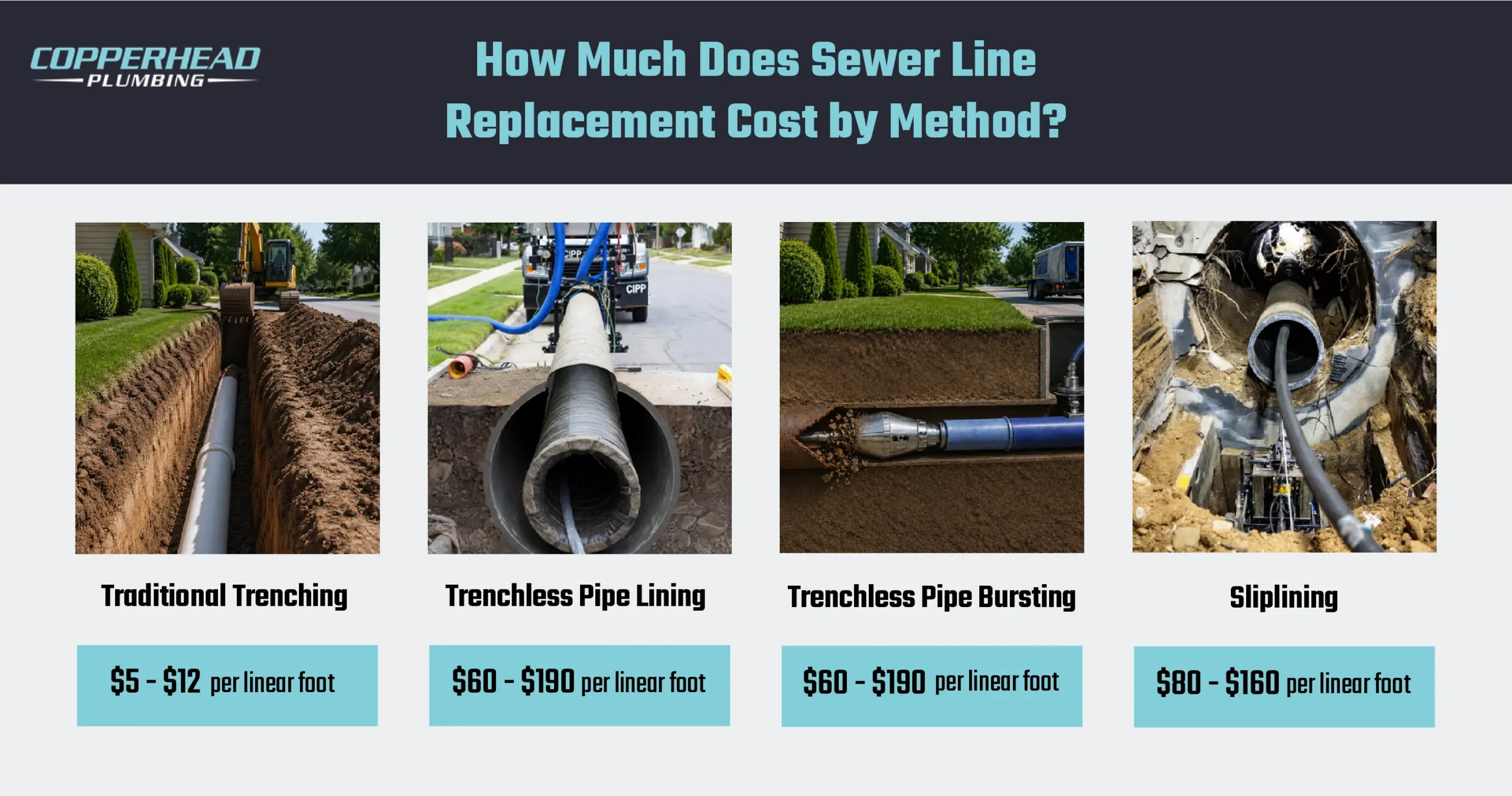
Sewer line replacement cost by method ranges from $600 to $20,000, depending on the replacement method used, such as traditional excavation, trenchless pipe lining, pipe bursting, or sliplining, along with differences in labor cost, equipment requirements, and project complexity. Each method offers a different balance between excavation work and restoration needs, which directly affects the total cost of sewer line replacement.
How Much Does Traditional Trenching Cost?
Traditional trenching costs $5 to $12 per linear foot for basic projects, with total project costs ranging from $600 to $3,000, depending on the depth and length of the sewer line. This traditional trenching method involves full excavation along the pipe path, which increases labor costs and excavation costs. Deeper underground placement and longer pipe runs require more equipment and time, while surface disruption leads to additional landscaping costs to restore the property after the sewer line replacement.
How Much Does Trenchless Pipe Lining (CIPP) Cost?
Trenchless pipe lining (CIPP) costs $60 to $190 per linear foot, with total project costs ranging from $6,000 to $12,000. This trenchless method installs a resin-coated liner inside the existing sewer pipe, reducing excavation costs and preserving landscaping. It works effectively for pipes with minor to moderate damage while maintaining proper wastewater flow. The final CIPP cost depends on pipe length, pipe diameter, existing pipe condition, access points, inspection cost, and the specialized equipment required for the trenchless lining process.
How Much Does Trenchless Pipe Bursting Cost?
Trenchless pipe bursting costs $60 to $190 per linear foot, with total project costs ranging from $6,000 to $12,000, depending on factors such as pipe length, pipe diameter, soil conditions, and access points. This trenchless pipe bursting method replaces the existing sewer pipe by breaking it apart while installing a new pipe in the same alignment. It works well for severely damaged or collapsed pipes and allows full sewer line replacement with minimal surface disruption compared to traditional excavation.
How Much Does Sliplining a Sewer Line Cost?
Sliplining a sewer line costs $80 to $160 per linear foot, with total project costs ranging from $4,000 to $20,000, based on factors such as pipe length, pipe diameter, existing pipe condition, and site access. This trenchless method installs a smaller pipe inside the existing sewer line, reducing excavation and preserving landscaping. It provides a durable internal lining that improves wastewater flow and extends the pipe’s lifespan, making it a reliable solution for moderate pipe damage without requiring a full system replacement.
How Much Does Sewer Line Replacement Cost by Material?
Sewer line replacement cost by material ranges from $2,000 to $25,000+, based on the pipe material used, such as PVC, ABS, cast iron, orangeburg, clay, or concrete, along with differences in durability, installation method, and labor cost. Each pipe material affects the overall sewer line replacement cost differently: some are lightweight and easier to install, while others require more labor and higher material costs.
How Much Does PVC Sewer Pipe Replacement Cost?
PVC sewer pipe replacement costs $3 to $8 per linear foot for materials only, with total project costs ranging from $3,400 to $10,000+, especially for deeper underground sewer lines. PVC pipe is lightweight, corrosion-resistant, and easier to install, which helps reduce labor costs compared to heavier pipe materials. The overall sewer line replacement cost increases with deeper lines, longer pipe runs, and projects that require additional excavation, inspection, and proper connection to the existing plumbing system.
How Much Does ABS Pipe Replacement Cost?
ABS pipe replacement falls within a range of $50 to $250 per linear foot, while a full sewer line project totals $2,000 to $10,000. Known for its lightweight, durable structure, ABS pipe enables efficient installation in plumbing systems and supports reliable wastewater flow. Project costs vary with installation depth, pipe length, and site conditions, especially when working with underground sewer lines that require precise alignment, secure connections, and proper long-term system performance.
How Much Does Cast Iron Sewer Pipe Replacement Cost?
Cast iron sewer pipe replacement costs $100 to $300 per linear foot, with total costs for a full replacement ranging from $8,000 to $25,000, depending on factors such as pipe length, depth, accessibility, and the condition of the existing pipe. Cast iron pipe is extremely durable and commonly found in older plumbing systems, but it requires more labor-intensive removal and installation. These factors contribute to higher project costs compared to lightweight pipe materials due to the complexity of handling and installation.
How Much Does It Cost to Replace Orangeburg Pipe?
The cost to replace Orangeburg pipe ranges from $60 to $200 per linear foot, with total project costs between $16,000 and $23,000, depending on factors such as pipe length, depth, accessibility, and the condition of the existing sewer line. Orangeburg pipe, found in older sewer systems, breaks down over time due to its fiber-based structure, which leads to pipe collapse and restricted wastewater flow. Replacement requires full removal and installation of a new sewer line, making it a necessary long-term solution to restore proper plumbing system performance.
How Much Does Clay Sewer Pipe Replacement Cost?
Clay sewer pipe replacement costs $50 to $250 per linear foot, with total project costs ranging from $5,000 to $20,000, based on factors such as pipe length, depth, accessibility, and existing pipe condition. This clay sewer pipe replacement cost reflects the need to remove brittle sections of pipe and install a new sewer line to restore proper wastewater flow. Clay pipes are prone to cracking and root intrusion, which can lead to structural damage and require replacement to maintain a reliable plumbing system.
How Much Does Concrete Sewer Line Replacement Cost?
Concrete sewer line replacement costs $60 to $250 per linear foot, bringing total project costs to $5,000 to $25,000+, depending on pipe length, depth, accessibility, and existing pipe condition. The cost of replacing the concrete sewer line reflects the effort required to remove heavy pipe and install a new line to ensure proper wastewater flow. Structural wear and cracking in concrete pipes lead to system failure, which makes replacement necessary for long-term plumbing system reliability.
How Much Does Sewer Line Replacement Cost in the USA?
Sewer line replacement in the USA costs $3,000 to $25,000+, based on factors such as pipe length, depth, property access, replacement method, and labor cost. This average sewer line replacement cost reflects a wide range of residential projects, from simple replacements with minimal excavation to complex installations that require specialized equipment, deeper digging, and full system replacement.
How Much Does Sewer Line Replacement Cost in Florida?
In Florida, sewer line replacement costs range from $5,000 to $25,000+, with pricing influenced by site conditions, including soil type, groundwater levels, pipe depth, and access to the sewer line. These conditions increase excavation complexity and require careful installation planning to manage underground challenges. Higher groundwater levels and sandy soil can affect trench stability and equipment use, leading to increased labor costs and impacting the long-term durability and performance of the sewer system.
How Much Does Sewer Line Replacement Cost in Atlanta?
Sewer line replacement costs in Atlanta range from $4,000 to $15,000+, depending on factors such as pipe length, depth, property layout, and replacement method. Older plumbing systems and established residential areas can increase excavation complexity and labor cost due to underground utility lines and limited access. These conditions affect the project timeline and require careful installation planning, which influences the overall performance and long-term reliability of the sewer system in Atlanta.
How Much Does Sewer Line Replacement Cost in Roswell?
Sewer line replacement costs in Roswell range from $792 to $5,949, depending on factors such as pipe length, depth, property access, and the condition of the existing sewer line. Lower costs apply to minor or partial replacement projects, while higher costs reflect more extensive work within the sewer system. In Roswell, local property layouts and underground conditions influence labor costs and project scope, which in turn affect installation requirements and overall sewer system performance.
How Much Does Sewer Line Replacement Cost in Sandy Springs?
The cost of sewer line replacement in Sandy Springs ranges from $3,000 to $15,000+, based on factors such as pipe length, depth, property access, and replacement method. Properties with established landscaping or nearby underground utilities create additional excavation challenges and increase labor requirements. Local site conditions in Sandy Springs shape the overall project scope and influence installation efficiency, long-term durability, and proper wastewater flow within the sewer system.
How Much Does Sewer Line Replacement Cost in Gahanna?
Sewer line replacement costs in Gahanna range from $3,000 to $7,000, depending on factors such as pipe length, depth, property access, and replacement method. Residential properties with moderate excavation needs and standard plumbing systems fall within this range. In Gahanna, local soil conditions and property layout influence how easily contractors access underground sewer lines. These conditions affect labor cost, project timeline, and installation efficiency, which directly impact long-term sewer system performance and reliability.
What Factors Affect Sewer Line Replacement Costs?
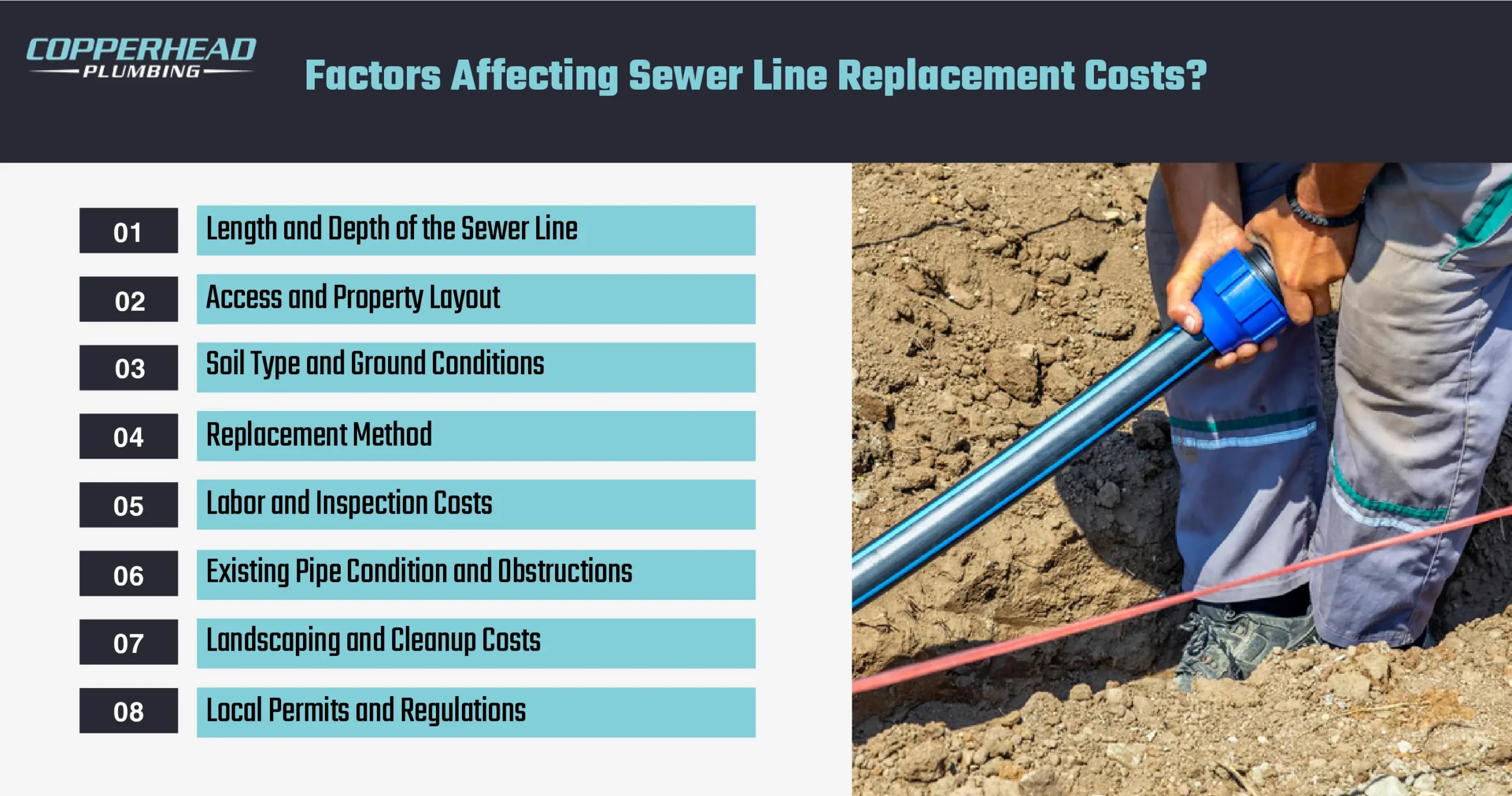
The factors that affect sewer line replacement cost include pipe length, depth, property access, soil conditions, replacement method, labor and inspection costs, pipe condition, landscaping, and local permits. These factors determine the overall project scope and directly influence the final cost estimate for sewer line replacement.
8 factors that affect sewer line replacement cost include:
- Length and Depth of the Sewer Line
- Access and Property Layout
- Soil Type and Ground Conditions
- Replacement Method
- Labor and Inspection Costs
- Existing Pipe Condition and Obstructions
- Landscaping and Cleanup Costs
- Local Permits and Regulations
- Length and Depth of the Sewer Line
The length and depth of the sewer line directly increase the replacement cost, as longer pipes require more material and raise the cost per linear foot, ranging from $50 to $250+ per foot. Deeper installations raise sewer line replacement costs due to added excavation, labor, and equipment, while also increasing project complexity and affecting long-term system stability and performance.
- Access and Property Layout
More difficult access and a complex property layout increase sewer line replacement costs by requiring additional labor, specialized equipment, and careful excavation planning. Tight spaces, obstructed pipe locations, and structures such as driveways or foundations raise excavation costs due to restricted movement. These conditions increase labor costs and project time, leading to a higher total sewer line replacement cost for installation and restoration work.
- Soil Type and Ground Conditions
While replacing a sewer line, soil type and ground conditions increase sewer line replacement cost by affecting excavation difficulty and trench stability. Hard soil and rocky ground raise excavation costs due to slower digging and the need for specialized equipment. Loose or wet soil requires additional support and safety measures, which increase labor cost and extend the overall project timeline for underground installation.
- Replacement Method
The replacement method determines sewer line replacement cost by varying the level of excavation, labor, and equipment required for the project. Traditional trenching increases costs, with projects ranging from $600 to $3,000 due to full excavation, while trenchless methods cost $6,000 to $12,000, reduce digging, but require specialized equipment. These differences affect the project timeline, labor cost, and overall efficiency of sewer line installation.
- Labor and Inspection Costs
During sewer line replacement, labor and inspection costs increase the total sewer line replacement cost by adding skilled work and diagnostic services. Labor charges range from $50 to $200 per hour, while camera inspection costs range from $100 to $500 to identify pipe damage. Proper inspection ensures accurate installation, reduces repair errors, and supports reliable sewer system performance after completion.
- Existing Pipe Condition and Obstructions
Severely damaged pipes and internal obstructions increase sewer line replacement cost by requiring additional removal, cleaning, and preparation work before installation. Cracked pipes, collapsed sections, and blockages such as tree roots or debris demand extra labor and specialized equipment. This added complexity extends the project timeline and increases the total sewer line replacement cost due to more intensive excavation and repair efforts.
- Landscaping and Cleanup Costs
Repairing and restoring disturbed areas increases sewer line replacement costs because excavation damages surfaces that must be rebuilt after installation. Lawns, driveways, sidewalks, and garden areas require cleanup and restoration once the sewer line work is complete. This added work raises labor and material costs, especially in projects with extensive digging, thereby increasing the total sewer line replacement cost.
- Local Permits and Regulations
When replacing a sewer line, local permits and regulations increase the cost of sewer line replacement by adding approval fees and compliance requirements before work begins. Permit costs range from $100 to $500 or more, depending on local building codes and project scope. These requirements may include inspections and documentation, which extend project timelines and increase labor costs, contributing to the total sewer line replacement cost.
Sewer Line Repair vs. Replacement: Which One Do You Actually Need?
Sewer line repair is suitable for minor, isolated issues, while full sewer line replacement is necessary for extensive or recurring damage. If the problem is limited to a small section, such as a single crack or blockage, repair offers a quicker, lower-cost solution with minimal disruption. Replacement becomes the better choice when multiple sections fail, backups keep recurring, or the pipe shows structural deterioration, as it provides a long-term solution that improves system reliability and prevents recurring repair costs.
Is Sewer Line Replacement Worth It?
Yes, sewer line replacement is worth it as it prevents emergency repairs, increases home value, eliminates recurring backups, improves wastewater flow, reduces safety risks, and protects your property from damage. It also provides a long-term solution that reduces ongoing maintenance and helps ensure the sewer system’s reliable performance.
Key benefits of sewer line replacement include:
- Prevents Costly Emergency Repairs: Stops sudden sewer failures that lead to expensive, urgent fixes and property damage.
- Increases Home Value:Improves the overall plumbing system, which makes the property more attractive to buyers.
- Eliminates Recurring Blockages and Backups: Removes damaged or clogged pipes that cause repeated sewer issues.
- Improves Wastewater Flow Efficiency:Ensures smooth and uninterrupted wastewater movement through a new sewer line.
- Reduces Health and Safety Risks: Prevents sewage leaks and contamination that can harm occupants.
- Protects Your Property from Structural Damage: Avoids foundation issues and soil instability caused by leaking or broken sewer pipes.
How to Save on Sewer Line Replacement Costs?
To save on sewer line replacement cost, choose trenchless methods, act early, check insurance, look for rebates, schedule in low-demand seasons, bundle plumbing work, and get a written quote. These steps reduce labor cost, prevent major damage, and help control the overall project budget.
Process to save on sewer line replacement costs includes:
- Choose Trenchless to Cut Labor and Restoration Costs:Reduces excavation and lowers total project cost.
- Act Early Before a Small Issue Becomes a Full Replacement: Prevents minor damage from turning into expensive repairs.
- Check Your Homeowners Insurance Before Paying Out of Pocket: Helps cover part of the sewer line replacement cost.
- Ask Your Municipality About Sewer Rebate Programs: Provides potential financial assistance for replacement projects.
- Schedule in Late Fall or Winter When Demand is Lower: Lowers labor costs due to reduced contractor demand.
- Bundle Sewer Work with Other Plumbing Jobs to Save on Labor: Cuts overall labor expenses by combining work.
- Always Get a Written Quote to Avoid Hidden Costs: Ensures clear pricing and prevents unexpected charges.
DIY vs. Professional Sewer Line Replacement: Which One Should You Choose?
Professional sewer line replacement is required for complex, deep, or recurring sewer issues, while DIY is only suitable for very minor, easily accessible problems. If the issue involves a small, exposed section, DIY may handle a quick fix with minimal tools. For major damage, underground pipes, or repeated backups, professional sewer line repair and replacement services ensure proper inspection, accurate diagnosis, and correct installation, reducing risk and supporting long-term sewer system performance.