Skip to content

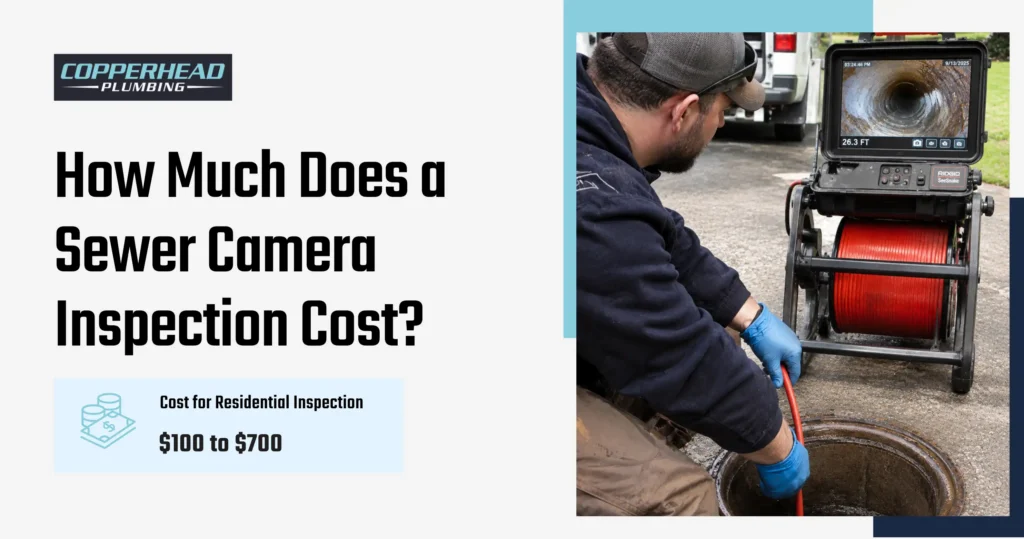
How Much Does a Sewer Camera Inspection Cost?
A sewer camera inspection costs $100 to $700 for a typical residential inspection in the United States. More complex inspections can cost $271 to $1,725, depending on sewer line length, cleanout accessibility, pipe condition, camera equipment, and labor requirements. Short, accessible sewer lines generally cost less to inspect than longer lines with blockages, multiple branches, or difficult access.
The total sewer camera inspection cost also depends on locating equipment, video recording, written reports, emergency scheduling, and local service rates. Drain cleaning, hydro jetting, sewer repairs, pipe replacement, and additional access work are normally charged separately. For homebuyers, a sewer scope inspection may cost less when added to a standard home inspection than when booked as a standalone diagnostic service.
What Is the Average Sewer Camera Inspection Cost?
The average sewer camera inspection cost ranges from $100 to $700, with reported prices extending to $1,500+ for more involved inspections. A separate 2026 pricing dataset from Angi places the average at $995, with most projects costing $271 to $1,725. These estimates reflect different project samples and service scopes rather than one standardized national fee. A typical inspection includes inserting a sewer camera through an access point, examining the pipe interior, and identifying visible blockages or damage.
How Much Does a Sewer Camera Inspection Cost by Line Length?
Sewer camera inspection costs by line length range from $175 to $800, with lines under 50 feet costing $175 to $250, lines between 50 and 100 feet costing $250 to $400, and lines over 100 feet costing $400 to $800. Longer sewer lines may require more push cable, camera travel, inspection time, and labor. These ranges represent length-based pricing estimates, while the final fee also depends on pipe condition, cleanout access, and inspection complexity.
How Much Does a Sewer Camera Inspection Cost for Lines Under 50 Feet?
A sewer camera inspection for lines under 50 feet costs $175 to $250, depending on cleanout access, pipe condition, and technician time. Short sewer lines require less camera travel and push cable handling, which can keep the inspection fee near the lower end of professional pricing. An accessible sewer cleanout allows the technician to insert the camera head directly into the line, while locating equipment, recorded footage, or a written inspection report may increase the final cost.
How Much Does a Sewer Camera Inspection Cost for 50-100 Foot Lines?
A sewer camera inspection for lines between 50 and 100 feet costs $250 to $400, depending on camera travel distance, sewer line accessibility, and inspection time. This length range covers many residential sewer laterals and may require additional push cable handling to examine the pipe interior. Offset joints, pipe bends, root intrusion, or grease buildup can slow camera movement, while defect locating or repeated camera passes may increase labor requirements and the total inspection fee.
How Much Does a Sewer Camera Inspection Cost for Lines Over 100 Feet?
A sewer camera inspection for lines over 100 feet costs $400 to $800, depending on sewer line length, camera cable capacity, access conditions, and labor. Longer underground sewer lines may require extended push cable, a footage counter, locating equipment, or multiple camera passes to examine the pipe interior. Complex pipe layouts, restricted camera movement, and additional access points can increase inspection time, while very long or obstructed sewer systems may require an individually prepared service quote.
How Does Sewer Line Access Affect Camera Inspection Cost?
Sewer line access affects camera inspection costs, ranging from $125 to $500 with an existing cleanout and $175 to $750 without a usable cleanout. An accessible sewer cleanout allows the technician to insert the inspection camera directly into the sewer lateral, reducing setup time and labor costs. Properties without a cleanout may require toilet removal and reinstallation or an alternative access point, increasing the total inspection fee. Additional work, such as cleanout installation or excavation, is generally charged separately from the sewer camera inspection.
How Much Does an Inspection Cost With an Existing Sewer Cleanout?
A sewer camera inspection with an existing, accessible cleanout costs $125 to $500, depending on sewer line length, pipe condition, and inspection requirements. The cleanout provides direct access to the sewer lateral, allowing the technician to insert the camera head and push cable without removing plumbing fixtures or creating another entry point. This accessibility reduces setup time and labor costs, although additional services such as defect locating, video recording, and written inspection reports may increase the final price.
How Much Does an Inspection Cost Without a Sewer Cleanout?
Without an accessible sewer cleanout, a sewer camera inspection costs $175 to $750, depending on the alternative entry point and additional labor required. The technician may need to remove and reinstall a toilet to access the sewer line, increasing preparation time and service costs compared with direct cleanout access. If no suitable entry point exists, cleanout installation or excavation may be necessary and is typically billed separately. The total inspection cost depends on access difficulty, pipe location, and the work required to insert the camera safely.
How Much Does a Sewer Scope Inspection Cost When Buying a House?
A sewer scope inspection when buying a house costs $100 to $500, depending on whether the service is added to a home inspection or booked separately. A home inspection add-on costs $100 to $250, while a standalone sewer scope typically costs $125 to $500 with an accessible cleanout. Difficult sewer line access may increase the inspection cost to $175 to $750. The camera examines the underground sewer lateral for visible cracks, tree root intrusion, blockages, joint separation, and pipe deterioration, helping homebuyers assess potential sewer repair needs before completing the purchase.
How Much Does a Sewer Scope Cost as a Home Inspection Add-On?
Adding a sewer scope to a standard home inspection costs $100 to $250, depending on the inspection provider, sewer line accessibility, and service package. This fee is separate from the general home inspection charge, with combined home and sewer camera inspections costing approximately $400 to $750. Bundled scheduling may reduce travel and setup expenses compared with separate appointments. The inspection identifies visible sewer line defects, while recorded footage and written findings may be included or charged separately.
How Much Does a Standalone Sewer Scope Inspection Cost?
A standalone sewer scope inspection costs $125 to $500 for a residential property with an accessible cleanout, while inspections requiring alternative access may cost $175 to $750. The technician inserts a sewer camera into the lateral to identify visible blockages, root intrusion, pipe cracks, and structural deterioration. Removing and reinstalling a toilet can increase labor costs when no usable cleanout exists. Additional services such as underground defect locating, video recording, and written inspection reports may affect the final inspection price.
What Factors Affect Sewer Camera Inspection Cost?

The factors that affect sewer camera inspection cost include sewer line length, cleanout accessibility, number of branch lines, pipe condition, camera equipment, inspection reports, labor, emergency scheduling, and local service rates. These factors determine the inspection setup, camera travel requirements, diagnostic work, and technician time needed to examine the sewer system.
9 factors that affect sewer camera inspection cost include:
- Sewer Line Length
Longer sewer lines can increase camera inspection costs by requiring more push cable, camera travel, and technician time. Length-based estimates range from $175 to $250 for lines under 50 feet and $400 to $800 for lines over 100 feet. Extended underground runs may also require additional cable handling, defect locating, or repeated camera passes, increasing the inspection workload.
- Cleanout and Sewer Line Accessibility
A usable sewer cleanout can reduce camera inspection setup and labor by providing direct entry into the sewer lateral. Inspections with cleanout access typically cost $125 to $500, while inspections without a usable cleanout may cost $175 to $750. Buried cleanouts, obstructed access points, or the need to remove a toilet can increase the total service fee.
- Number of Sewer Lines or Branches
Properties with multiple sewer laterals or drainage branches may incur additional inspection charges of $75 to $200 per extra line, depending on access conditions and service requirements. Each separate branch can require another camera pass, additional push cable handling, and more technician time to examine the pipe interior. A single accessible sewer lateral generally costs less to inspect than a complex drainage system with multiple underground branches.
- Pipe Condition and Blockages
Blocked, cracked, collapsed, or deteriorated sewer pipes can increase inspection time by restricting camera movement or requiring repeated examination. Tree root intrusion, grease buildup, offset joints, pipe bellies, and corrosion can obstruct the camera head or limit visibility. If the camera cannot advance through a blockage, drain cleaning may be required before the technician can inspect the remaining sewer line.
- Camera and Locating Equipment
Camera and locating equipment affect inspection pricing through the tools required to examine and locate sewer defects. Standard camera inspections are reported at $150 to $300, while high-definition camera services cost $300 to $600 and specialty systems can cost $600 to $1,500 or more. A self-leveling camera, extended push cable, sonde transmitter, or surface locator may be needed for specific pipe conditions or defect-location requirements.
- Video Recording and Inspection Reports
Obtaining recorded sewer camera footage or a written inspection report may add $50 to $150 when documentation is excluded from the base service. These records can include pipe condition findings, still images, defect locations, and visual evidence of root intrusion, pipe cracks, or joint separation. Some plumbing providers include documentation in the inspection fee, while others charge separately for saved footage or detailed reports. Live camera viewing does not always include a recording or formal report.
- Inspection Time and Labor
Inspection time and labor affect sewer camera inspection pricing through the technician’s work required to access, examine, and document the sewer line. Some providers charge $75 to $150 per hour for complex inspection work, while standard visits may include labor in a flat service fee. Long sewer laterals, multiple branches, restricted cleanouts, and repeated camera passes can increase the total inspection duration.
- Emergency or After-Hours Service
Emergency or after-hours sewer camera inspection services may carry an additional $100 to $300 rush or callout charge. Same-day appointments, evening visits, and weekend scheduling can require separate technician availability and travel arrangements. The final emergency inspection cost depends on the provider’s scheduling policy, service location, and whether cleaning or other plumbing work is also required.
- Local Labor and Service Rates
Local labor and service rates affect sewer camera inspection costs through regional technician wages, travel distance, operating expenses, and provider pricing. Urban locations and areas with higher service overhead may have higher inspection fees than regions with lower labor costs. Property access, local competition, and the availability of specialized camera equipment also influence the final quote.
What Additional Costs May Come With a Sewer Camera Inspection?
Additional sewer camera inspection costs may include locating and marking, extra branch inspections, video reports, drain cleaning, hydro jetting, and sewer line repairs. These services are not always included in the standard inspection fee and may increase the final bill when the technician needs to identify an underground defect, document pipe damage, or clear an obstruction. Each service should be priced separately to distinguish diagnostic costs from cleaning and corrective work.
6 additional costs that may come with a sewer camera inspection include:
- Sewer Line Locating and Marking
An additional $40 to $100 may apply when a technician needs to locate an underground sewer line or mark the exact position of a pipe defect. A camera head equipped with a sonde transmitter sends a signal that a surface locator can detect. This process helps identify the sewer line route, estimate pipe depth, and pinpoint damaged sections before repair work begins.
- Additional Branch Line Inspection
For properties with multiple sewer laterals or drainage branches, inspecting each additional line may cost $75 to $200. Separate camera entries, longer inspection times, and additional push cable handling increase the overall diagnostic cost. The final charge depends on the number of branches, their accessibility, and the distance the camera must travel.
- Video Recording or Written Report
Expect an additional $50 to $100 for video recording or a written sewer camera inspection report when these services are excluded from the standard package. Recorded footage, still images, annotated defects, and written findings provide documentation of pipe condition and visible damage. Homebuyers and property owners can use these records to evaluate sewer defects, plan repairs, and communicate findings to plumbing contractors.
- Drain or Sewer Cleaning
Clearing a blocked sewer line with a drain snake typically costs $150 to $350+ when cleaning is necessary before camera inspection. Tree roots, grease buildup, debris, and recurring clogs can restrict camera movement and prevent a complete examination of the sewer lateral. Removing these obstructions allows the technician to inspect additional pipe sections, although cleaning is generally billed separately from the inspection.
- Hydro Jetting
Heavy grease buildup, debris, or stubborn sewer blockages may require hydro jetting, which typically costs $350 to $600 for residential sewer lines. This cleaning method uses high-pressure water to remove suitable obstructions and restore wastewater flow. Severe blockages or extensive root intrusion can increase costs to $800 to $1,200 or more. Before performing hydro jetting, the technician evaluates pipe condition to determine whether the method is appropriate. The service is generally billed separately from the sewer camera inspection.
- Sewer Line Repair
Repairing localized sewer pipe damage, such as cracks, damaged joints, or short broken sections, typically costs $600 to $3,000 or more, depending on repair complexity. A sewer camera inspection helps identify visible pipe defects and their locations, allowing plumbers to assess the required repair work. Extensive damage, difficult underground access, excavation requirements, and pipe material can increase the final repair cost. Sewer line repairs are billed separately from the camera inspection fee.
What Is Not Included in Sewer Camera Inspection Cost?
The standard sewer camera inspection cost generally does not include drain cleaning, hydro jetting, pipe repairs, sewer line replacement, or additional work required to create camera access. A sewer camera inspection is a diagnostic service that examines the pipe interior and identifies visible defects, while cleaning and construction services address the conditions found during inspection. These services require separate estimates unless the plumbing provider explicitly includes them in a bundled package.
5 services generally not included in sewer camera inspection cost are:
- Drain Cleaning
Removing grease buildup, debris, or tree roots from a sewer line requires a separate cleaning service that is not covered by the standard sewer camera inspection fee. A drain snake clears suitable obstructions, while the inspection camera identifies blockages and examines the pipe interior. If a blockage prevents the camera from advancing, the technician may recommend drain cleaning before completing the inspection.
- Hydro Jetting
Unlike sewer camera inspection, which identifies visible pipe defects, hydro jetting uses high-pressure water to remove suitable buildup and obstructions from the sewer line. This cleaning process requires specialized equipment and labor, making it a separately billed service. Some plumbing providers combine hydro jetting and camera inspection in one package, but the quoted price must explicitly include both services.
- Pipe Repairs
Fixing cracked pipes, broken sections, offset joints, corrosion, or joint separation involves additional repair work beyond the standard sewer camera inspection. Although the camera helps identify visible structural defects, it does not correct the underlying damage. The plumber evaluates pipe condition, defect location, accessibility, and the required repair method before preparing a separate repair estimate.
- Sewer Line Replacement
Replacing a collapsed or severely deteriorated sewer lateral requires a separate plumbing project involving pipe materials, skilled labor, specialized equipment, and potentially excavation. A sewer camera inspection can identify visible conditions that indicate replacement may be necessary, but the inspection fee does not cover pipe removal or installation. The replacement contractor calculates the project cost based on pipe length, damage severity, underground access, and property conditions.
- Additional Access Work
When an existing sewer cleanout is missing, buried, damaged, or inaccessible, the technician may need additional preparation before inserting the inspection camera. This work can involve toilet removal, cleanout installation, or excavation, depending on the property’s plumbing layout. Such services may carry separate labor and equipment charges, so the inspection quote should clarify whether access preparation and fixture reinstallation are included.
How to Estimate Your Sewer Camera Inspection Cost
To estimate your sewer camera inspection cost, determine the sewer line length, check cleanout access, identify the number of lines, confirm locating requirements, review video and reporting needs, and account for possible cleaning. These details help the inspection provider estimate equipment use, technician time, and additional service charges before scheduling the inspection.
7 steps to estimate your sewer camera inspection cost include:
- Estimate the Sewer Line Length
Measure or estimate the distance between your house and the sewer connection or intended inspection endpoint to calculate the expected sewer camera inspection cost. Lines under 50 feet may cost $175 to $250 to inspect, while lines over 100 feet may cost $400 to $800. Knowing the estimated pipe length helps the technician assess camera cable requirements, inspection time, and potential locating work before preparing a quote.
- Check for an Accessible Cleanout
Locate the sewer cleanout on your property and verify that it is visible and accessible before scheduling an inspection. An existing cleanout provides direct access to the main sewer lateral and can help keep inspection costs within the typical $100 to $700 range. A buried, damaged, or missing cleanout may require an alternative entry point, additional labor, or separately charged access preparation.
- Determine How Many Lines Need Inspection
Identify whether your property requires inspection of only the main sewer lateral or additional drainage branches to estimate the total service cost. Multiple sewer lines require separate camera passes, increasing technician time and inspection fees. Defining the inspection scope before booking helps the plumbing provider calculate service requirements and reduces unexpected charges.
- Check Whether Locating Is Required
Ask the technician whether underground sewer line tracing, defect marking, or pipe depth estimation is necessary for your inspection. These services may require a sonde transmitter inside the camera head and a compatible surface locator to identify underground pipe positions. Confirm whether locating carries an additional fee and whether identified defects will be marked above ground.
- Confirm Whether Video or a Written Report Is Included
Verify that the quoted sewer camera inspection price includes recorded footage, still images, written findings, and defect documentation before scheduling the service. Some plumbing providers include these records in the standard package, while others charge separately for video recording or formal reports. Inspection documentation helps homeowners evaluate pipe cracks, root intrusion, offset joints, and other visible defects when planning maintenance or repairs.
- Account for Cleaning if the Camera Cannot Pass Through the Line
Include potential drain cleaning expenses in your inspection budget if recurring backups, grease buildup, tree roots, or heavy debris may obstruct camera movement. These blockages can prevent the technician from examining the entire sewer lateral without additional cleaning. Drain snaking or hydro jetting may be necessary before continuing the inspection, with cleaning costs generally billed separately.
- Request an Itemized Quote
Request a written sewer camera inspection estimate that separates the base service fee from charges for locating, video recording, reports, branch inspections, cleaning, access work, travel, and emergency scheduling. Compare itemized quotes to identify differences in service coverage and total pricing. Confirm that the estimate includes the intended sewer line length and requires your approval before additional work begins.
How Much Does DIY Sewer Camera Inspection Cost vs. Hiring a Professional?
DIY sewer camera inspection costs $100 to $300 per day for typical equipment rental, while purchasing a basic inspection camera may cost $200 to $1,000+ and professional-grade CCTV sewer cameras can cost $2,500 to $10,000. Hiring a professional generally costs $125 to $500 for a standard residential inspection, although complex inspections may cost more. DIY expenses depend on rental duration, camera cable length, locating equipment, recording capability, and sewer cleanout access, while professional services include technician operation and interpretation of visible pipe conditions.
How Much Does a DIY Sewer Camera Inspection Cost?
A DIY sewer camera inspection costs $100 to $300 per day to rent a sewer inspection camera, while purchasing a basic camera may cost $200 to $1,000+. Professional-grade CCTV inspection cameras cost approximately $2,500 to $10,000, depending on cable length, camera head, recording equipment, and locating capabilities. Camera rentals may also cost $70 to $175 for four hours or $350 to $780 per week.
DIY inspection costs can increase when the sewer line requires a longer push cable, a sonde transmitter, a surface locator, or video recording equipment. A missing sewer cleanout may also require separate plumbing work to establish camera access. Renting a camera does not include professional defect interpretation, drain cleaning, or repairs, and an obstruction may prevent the user from examining the entire sewer lateral.
How Much Does a Professional Sewer Camera Inspection Cost?
A professional sewer camera inspection costs $250 to $700, with more complex services ranging from $271 to $1,725 depending on sewer line length, access difficulty, camera technology, and labor. During professional sewer camera inspection services, a plumber or sewer inspection technician inserts a camera through a usable access point, advances the push cable, and examines the live video feed for blockages, root intrusion, pipe cracks, corrosion, offset joints, and other visible defects.
Depending on the inspection requirements, a professional technician may identify pipe defects, measure their distance along the sewer line, locate underground damage, record camera footage, and prepare written findings. Service packages vary by plumbing provider, with surface locating and detailed reporting sometimes carrying additional charges. These diagnostic findings help homeowners assess accessible pipe sections and determine whether drain cleaning, further investigation, or sewer line repair is necessary.
Is a Sewer Camera Inspection Worth the Cost?
Yes, a sewer camera inspection is worth the cost when buying a house, investigating recurring sewer backups, evaluating older sewer lines, or identifying suspected underground pipe damage. The inspection provides visual evidence of pipe condition without requiring excavation solely to view accessible pipe interiors. A sewer scope can identify visible blockages, root intrusion, cracks, corrosion, pipe bellies, and joint separation, helping homeowners and buyers make informed decisions about cleaning, maintenance, and repairs.
6 key benefits of a sewer camera inspection include:
- Identifies Hidden Sewer Line Damage: Detects visible pipe cracks, corrosion, collapsed sections, and offset joints that may not be apparent from surface conditions.
- Locates Blockages and Root Intrusion: Identifies obstructions such as tree roots, grease buildup, and debris that contribute to recurring clogs or sewer backups.
- Supports Home Purchase Decisions: Provides information about the sewer lateral’s observed condition before a buyer completes a property purchase.
- Documents Older Sewer Pipe Conditions: Helps assess visible deterioration in cast iron, clay, and Orangeburg sewer pipes.
- Supports Targeted Repair Planning: Uses camera footage, distance measurements, and locating equipment to help identify where further investigation or corrective work may be needed.
- Reduces Unnecessary Diagnostic Excavation: Allows technicians to examine accessible pipe interiors through a cleanout without digging solely to obtain a visual view.